
Last updated October 16, 2026
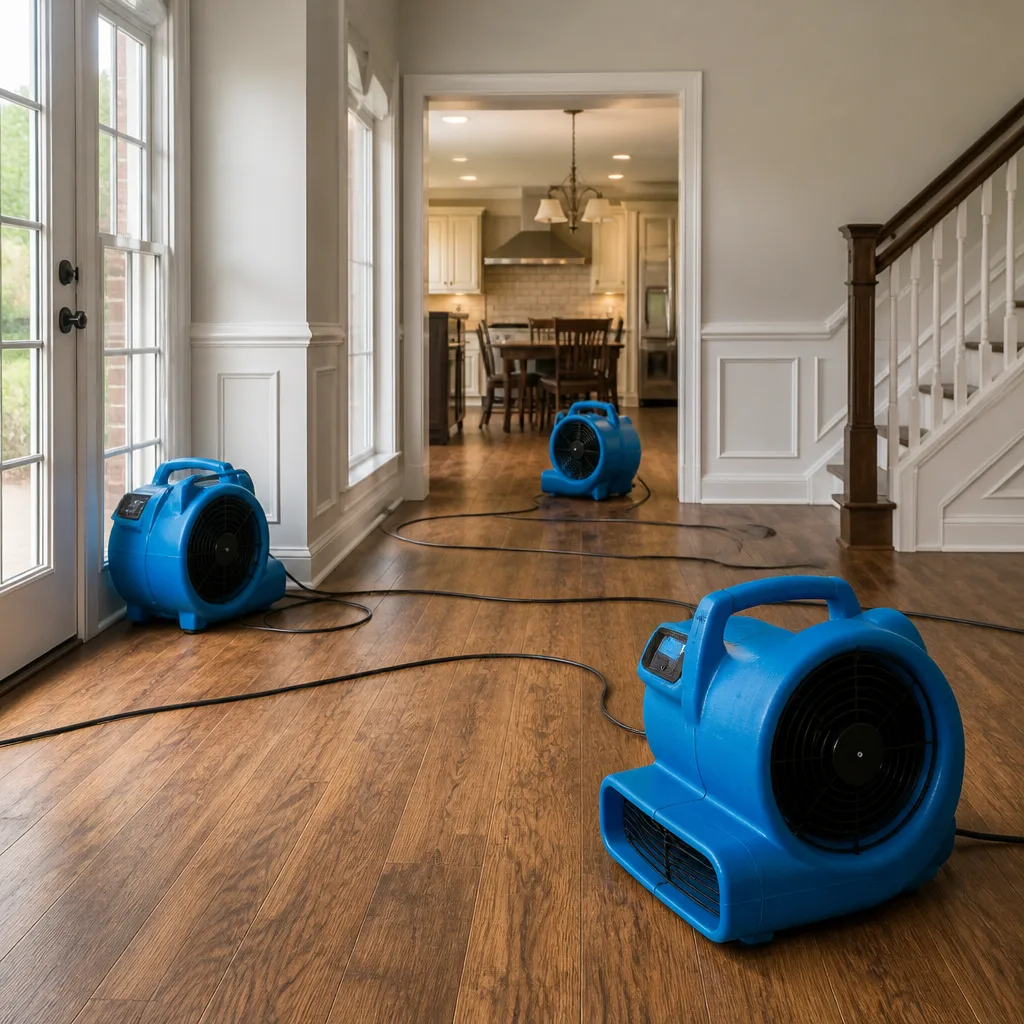 Water damage drying
 Fire & smoke cleanup
 Mold remediation
 Storm response
 Sewage cleanup
 Reconstruction
Free visual inspection and a written scope of work before any mitigation begins - photos, moisture readings, and drying logs go in your claim file
The scope we write is the scope we bill. Anything new gets shown to you, in writing, before we touch it.
Get your free estimateHow to Hire a Damage Restoration Contractor in Dallas: A Step-by-Step Guide
Within 24 hours of a major storm, door-to-door restoration crews appear in Dallas neighborhoods from Lake Highlands to Oak Cliff. The first paper many of them hand a stressed homeowner is not an estimate. It’s an Assignment of Benefits form that legally transfers insurance claim control to the contractor before a single drywall panel is removed. This guide walks you through hiring a damage restoration contractor in Dallas backward, from the contract language to the first phone call, so nothing gets signed away by accident. For a broader overview, see The Complete Guide to Damage Restoration in Dallas. You’ll learn which Texas-specific verifications actually matter, how to compare estimates line by line, and which questions separate a crew that knows Dallas slab foundations from one that just knows how to run a fan.
Restoration work we handle
Quick Answer
To hire a damage restoration contractor in Dallas, first verify their IICRC certification and Texas business registration, then get a written estimate with line-item detail before any work begins. Never sign an Assignment of Benefits form on the spot, and always compare at least two written scopes that use the same drying equipment standards and same guarantee terms. A qualified Dallas restoration company will put the price, the arrival window, and the warranty in writing before a tool is touched.
Table of Contents
- What an Assignment of Benefits Form Actually Does
- Three Texas-Specific Verifications Before Anyone Enters Your Home
- How to Compare Written Estimates Apples-to-Apples
- Questions That Reveal Real Dallas Experience
- Red Flags That Signal Trouble in Texas
- The 12 Questions to Ask Before You Sign Anything
- What a Proper Job Should Look Like After You Hire
- Common Mistakes to Avoid
- When to Call a Professional
- Frequently Asked Questions
- The Bottom Line
What an Assignment of Benefits Form Actually Does
An Assignment of Benefits, AOB for short, is a one- to two-page document that transfers your rights under your insurance policy to the contractor. Once signed, the contractor can bill your insurer directly, negotiate the claim on your behalf, and in many cases file suit against the insurance company without your involvement. The form is legal in Texas, and in the right circumstances it’s a convenience. In the wrong circumstances, it’s a surrender of leverage you may not realize you gave away until a dispute arises.
Here’s what changes the moment you sign an AOB in Dallas. First, the contractor now controls the claim amount, not you. If the contractor and your insurer disagree on scope or price, the disagreement is between them, and you’re largely a bystander. Second, you may lose the ability to switch contractors mid-job if the workmanship is poor, because the AOB gives the original contractor the right to collect payment directly from your insurer for work already performed. Third, if the contractor inflates the bill and the insurer refuses to pay the full amount, you can be caught in the middle with a lien threat against your Dallas property, even though you never personally agreed to the inflated amount.
This is not a theoretical risk. Florida saw AOB abuse levels so severe that the state legislature passed multiple reform laws between 2019 and 2022 to restrict the practice. Texas has not had the same volume of AOB litigation, but the form is equally binding here. A water damage restoration contractor in Dallas who pressures you to sign an AOB before providing a written estimate is asking you to hand over claim control before you know what the job actually involves.
Our position at Dryden Restoration Dallas is straightforward: we provide a written price before any work starts. We do not ask you to sign an AOB as a precondition for an estimate. If your situation genuinely benefits from direct insurer billing, we’ll explain exactly what that means and you can decide with full information. The Kingswell Way is to say the price before the work, not to secure legal claim rights before the scope exists.
Before you sign any AOB, ask the contractor to show you the specific paragraph that grants them authority to negotiate, the paragraph that limits your ability to cancel, and the paragraph that describes what happens in a payment dispute. If they can’t or won’t walk you through those clauses in plain English, do not sign.
Three Texas-Specific Verifications Before Anyone Enters Your Home
Texas does not require a statewide license specifically for water damage restoration or mold remediation contractors. That absence of a license mandate puts the verification burden on you. Here are the three checks that actually matter for a Dallas hire, along with exactly how to run them.
1. IICRC Certification
The Institute of Inspection, Cleaning and Restoration Certification, IICRC, is the damage restoration industry’s recognized benchmark for training and ethics. A firm that holds IICRC certification has completed coursework and testing in water damage restoration, applied structural drying, and mold remediation. You can verify a company’s IICRC status by searching the IICRC locator tool at iicrc.org. A technician or firm that cannot produce a current IICRC certification number is not trained to the standard the industry itself recognizes. Note that IICRC certifies individuals, so ask whether the technicians who will actually enter your Dallas home carry the certification, not just a principal sitting in an office.
2. Texas Secretary of State Business Registration
Any legitimate Dallas restoration company should be registered with the Texas Secretary of State as a business entity, or at minimum hold a current assumed name certificate, the formal name for a DBA, filed in the county where it operates. You can search the Texas Secretary of State’s online business registry for free at sos.texas.gov. A company that has no record there is operating informally, which makes enforcing a warranty or pursuing a legitimate complaint dramatically harder. This search takes three minutes, and it’s the single best filter for weeding out door-knock crews that vanish after the check clears.
3. TDLR Check Where Applicable
The Texas Department of Licensing and Regulation, TDLR, does not license general water restoration firms, but it does license specific trades that often intersect with restoration work. If your job involves electrical repairs after water damage, the electrician must hold a TDLR electrical license. If the scope includes structural repairs, the contractor must hold a TDLR registration for certain types of work. Ask the contractor directly: does this job involve any TDLR-licensed trade, and can you show me the current TDLR number for the person doing that work? A contractor who waves this off either doesn’t know Texas requirements or doesn’t want you checking.
Certifications and registrations are not a guarantee of good workmanship. But they are a minimum floor. In Dallas, where a water damage restoration job can run from three thousand dollars for a contained bathroom overflow to sixty thousand or more for a slab leak that sat over a weekend, that floor matters. Use our Water Damage Restoration Maintenance Checklist for Dallas Homeowners to stay ahead of costly surprises.
How to Compare Written Estimates Apples-to-Apples
Most Dallas homeowners compare restoration estimates by looking at the bottom-line number. That’s exactly how low-ball bids hook their prey. A thorough water damage scope and a designed-to-balloon scope can differ by thousands of dollars while looking identical at first glance. Here’s the line-item detail that separates a real scope from a bait price.
- Drying equipment count and duration. A legitimate estimate lists the exact number of air movers, dehumidifiers, and, where needed, Injectidry floor drying systems, along with the estimated days each unit will run. A vague line like “drying equipment as needed” is a change-order waiting to happen. Ask for a per-day drying equipment rate and a maximum number of days included in the price.
- Moisture mapping and monitoring visits. Proper water damage restoration in Dallas requires at least one daily monitoring visit during the drying phase, using moisture meters and thermal imaging to confirm RH, relative humidity, is actually falling. The estimate should list how many monitoring visits are included. If it doesn’t, assume they’re not included and will be billed separately.
- Demolition and disposal line items. Which materials are being removed, how much, and who hauls the debris? In Highland Park homes with plaster walls, demolition costs can be triple those of a drywall tear-out in a 1990s Plano tract house. The estimate must specify materials, square footage or linear feet, and disposal fees.
- Antimicrobial application and final cleaning. A real scope includes a biocide or antimicrobial application on affected materials, not just drying alone. It also includes final HEPA vacuuming and surface cleaning. If these lines are absent, ask why.
- Rebuild versus mitigation scope. Some Dallas contractors quote only mitigation, the dry-out and removal phase, and treat rebuild as a separate contract you’ll see later. Others quote both. Know which one you’re holding. A mitigation-only quote is not cheaper if the rebuild estimate arrives a week later at triple your expectations.
- Equipment brands mentioned by name. A company that uses Dri-Eaz, Phoenix, and XPOWER dehumidifiers and air movers is running professional-grade equipment. A company that can’t name its equipment brands is likely renting whatever is available that week. Equipment brands are not a cosmetic detail; they affect drying speed and the final result.
At Dryden Restoration Dallas, every estimate includes the written price before any work starts, a named arrival window, and the specific equipment models we’ll deploy. We’re part of the Kingswell family of independently owned restoration businesses, and the Kingswell Guarantee governs every job we write in Dallas. You’ll see the guarantee terms in writing before you see a signature line.
Questions That Reveal Real Dallas Experience
Dallas is not Houston, and it’s not Phoenix. Our clay soils, our slab foundation prevalence, our freeze-thaw cycles, and our specific plumbing profile create damage patterns that a contractor from out of state, or a storm-chasing crew working its way across the country, simply has not seen. Here are the questions that separate a company with genuine Dallas damage restoration experience from one that learned drying theory in a classroom. For Seasonal Damage Restoration Care for Dallas: Year-Round Homeowner’s Guide, check how local conditions shift through the year.
“What secondary damage do you check for after a Dallas slab leak?” A contractor who knows North Texas will immediately talk about checking for moisture migration under baseboards, wicking into adjacent rooms through the slab, and potential damage to hardwood floors that look dry on the surface. A generalist will talk only about the visible puddle. Slab leak secondary damage is the single most common under-scoped item in Dallas water restoration, and it’s how a $4,000 claim becomes a $14,000 claim that gets discovered after the contractor is gone.
“How do Dallas clay soils affect drying time after a foundation-adjacent leak?” The right answer references the fact that Dallas sits on expansive clay that holds moisture against slab edges, extending drying timelines compared to sandy-soil markets. The wrong answer is a blank stare. The wrongest answer is a confident “same as anywhere.” A contractor who has dried homes in Richardson, Garland, and Mesquite through a North Texas summer knows that ambient humidity already complicates drying, and clay soil against a foundation wall makes it worse.
“What’s your drying protocol when outdoor humidity is above 70%?” Dallas regularly sees summer humidity in that range. The correct answer involves sealed drying chambers, dehumidifier capacity matched to cubic footage of affected space, and monitoring that accounts for outside air infiltration. The wrong answer is “we just open the windows.” Run from that answer.
“Have you handled ice-maker supply line failures in 1980s North Dallas homes?” The polybutylene era of Dallas plumbing, common in homes built between the late 1970s and mid-1990s, produces recurring small-line failures that slowly saturate cabinets and subfloors. A contractor who has not heard the term “polybutylene” has not worked enough Dallas homes to charge you professional rates.
“What’s your relationship with local Dallas adjusters?” This is not about favoritism. It’s about whether the contractor knows how to document damage in the format Dallas-area insurers expect, including photo logs, moisture maps, and cause-and-origin language that matches policy definitions. A restoration company that has done direct insurance billing in Dallas for years has gone through that documentation drill hundreds of times. A new crew learns on your claim.
These are not trick questions designed to embarrass anyone. They’re calibration tools. Ask them calmly, and listen to whether the answer is specific or evasive. Five minutes of listening tells you more than twenty online reviews.
Red Flags That Signal Trouble in Texas
Some practices that are technically legal in other states are flashing warning lights in the Texas restoration market. Here’s what we tell homeowners in Dallas to watch for before a contractor ever sets foot inside.
- Verbal-only pricing. In Texas, a handshake quote is worth the paper it’s not printed on. The Kingswell Guarantee requires a written price before any work starts, and any legitimate Dallas restoration firm will produce a written estimate without being asked. If a contractor says “we’ll figure out the price as we go,” you’re being set up for a balloon.
- No named arrival window. A contractor who says “we’ll be there sometime Tuesday” is signaling that your schedule does not matter. A restoration company that gives you a named arrival window, a specific time block, is signaling that it runs on commitments. In an emergency, speed matters. But speed without a window is chaos, not service.
- Pressure to start same-day before an estimate is issued. This is the signature move of the door-knock crew. “We can start right now, but you have to sign this authorization.” The authorization is often an AOB or an open-ended work order. A legitimate company in Dallas can start emergency mitigation quickly and still put a written price in front of you first. We’ve started water extractions at 2 a.m. in Dallas, and we still produced a written scope before any demolition began.
- No proof of insurance or licensing. Ask for a certificate of insurance showing general liability and workers’ compensation. In Texas, workers’ comp is not required for all employers, but a restoration company without it is a liability waiting to land on your homeowner’s policy if a technician is injured on your property.
- A guarantee that’s only spoken. If the warranty is real, it’s written. If it’s spoken, it’s a sales technique. The Dryden 365-Day Done Right Promise is in writing on every job, and it entitles the customer to a free return visit if any covered repair fails within a full year. Ask any contractor: show me your warranty in writing. If the paper doesn’t exist, the warranty doesn’t exist.
- A change-order pattern on past jobs. You can’t see a contractor’s past change orders, but you can ask a pointed question: “What percentage of your Dallas jobs end up with a final price higher than the written estimate?” A contractor who says “almost none” is either lying or under-scoping. A contractor who says “here’s why change orders happen and how we prevent them” is worth hearing.
The 12 Questions to Ask Before You Sign Anything
Here is the complete list we recommend every Dallas homeowner work through before signing a restoration contract. You don’t need to ask all twelve on the first call. But you need the answers to all twelve before a signature goes on paper.
- Can you provide a written estimate before any work begins, and will that price be the price I pay unless I approve a change in writing?
- What is your named arrival window, and what happens if you miss it?
- Are your technicians background-checked and uniformed, and will the same crew handle my job from start to finish?
- Which equipment brands do you run, and how many dehumidifiers and air movers will this specific job require?
- How many days of drying are included in the estimate, and how many monitoring visits will you make during that drying period?
- What certifications do your technicians hold, and can I verify those certifications online right now?
- Will you provide a written warranty, and what exactly does it cover? What triggers a free return visit?
- Who does the rebuild work after mitigation, your crew or a subcontractor? If a subcontractor, who carries the warranty?
- Do you handle insurance billing directly, and will you provide photo documentation and moisture maps in the format my Dallas adjuster expects?
- What is your policy if the drying isn’t complete by the estimated day count? Do I pay extra, or does the guarantee cover extended drying?
- Are you registered with the Texas Secretary of State, and can you show me your certificate of insurance with workers’ comp?
- Do you require me to sign an Assignment of Benefits? If so, can you walk me through every paragraph before I decide?
These twelve questions will eliminate the bottom half of Dallas restoration contractors within about ten minutes of conversation. The ones who remain, deservedly, are the ones who can answer directly, in plain English, without hedging.
At Dryden Restoration Dallas home, we answer all twelve of these questions on the first call. That’s not a sales pitch. It’s an operating principle. The Kingswell Way is to say the price before the work, show up in the window we gave, leave the place cleaner than we found it, put the guarantee in writing, and come back if it fails.
What a Proper Job Should Look Like After You Hire
You’ve done the vetting. You’ve signed the written scope. Now what should a professionally run Dallas restoration job actually look like day to day? Here’s what experienced homeowners in Lakewood, Preston Hollow, and East Dallas tell us they value most once work begins.
Day one: assessment and extraction. The crew arrives within the named window. They conduct a moisture assessment using thermal imaging and penetrating moisture meters, not just a visual walkthrough. They document the affected areas with photos and mark moisture boundaries in writing. They begin water extraction immediately. If the job involves mold remediation, the affected area is contained with negative air pressure before any demolition begins, so spores don’t spread through your Dallas home.
Days two through four: drying and monitoring. Professional-grade dehumidifiers and air movers run continuously. The crew returns daily to check moisture readings and adjust equipment placement. You should see a drying log, a written record of RH and moisture content readings, each day. If you’re not seeing a log, ask for one. Psychrometric drying is the formal term for controlled drying using measured temperature, humidity, and airflow, and it requires daily data, not guesswork.
Days five and beyond: completion and documentation. The crew confirms drying is complete with final moisture readings that match unaffected baseline materials. They remove equipment. They perform final cleaning. You receive a written completion report with photo documentation suitable for insurance claims. If rebuilding is part of the scope, a written schedule for that phase is provided before mitigation wraps, not after.
A properly run water damage restoration in Dallas is boring, in the best sense. The equipment runs, the readings fall, the crew communicates, and the homeowner knows what’s happening and what happens next. Drama is a sign something is off.
Common Mistakes to Avoid
- Signing an AOB before reading it. This remains the single most damaging mistake a Dallas homeowner can make. You are transferring legal control of your insurance claim. Read every paragraph. If the contractor cannot explain a clause in plain English, do not sign.
- Choosing the lowest estimate without comparing line items. A low-ball bid in Dallas is usually a mitigation-only quote that excludes equipment days, monitoring visits, and rebuild scope. The low number becomes a high number through change orders, and you’ve already lost your comparison leverage.
- Assuming a big franchise name means better work. In Dallas, restoration quality follows the crew that shows up, not the logo on the truck. Independent Kingswell companies like Dryden Restoration Dallas are staffed by the same IICRC-trained technicians, running the same Dri-Eaz and Phoenix equipment, and held to a written guarantee that a franchise marketing department doesn’t have to honor.
- Waiting to call a professional while damage spreads. Water from a slab leak in Dallas clay soil doesn’t wait. Every day of delay expands the affected area and increases mold risk. Call recovery specialists immediately, and let the written estimate follow.
- Skimping on documentation. If you file an insurance claim, your documentation quality determines your payout. A contractor who provides photo logs, moisture maps, and daily drying records strengthens your claim. One who doesn’t leaves you arguing with an adjuster without evidence.
- Not asking about the rebuild phase until mitigation is done. Mitigation and reconstruction are two different contracts with many Dallas contractors. Know before you start whether you’re signing for one or both, and in what price range the rebuild will fall.
- Hiring without verifying the three Texas checks. IICRC certification, Texas Secretary of State registration, and TDLR status where applicable. Three checks, ten minutes, done. Skipping them because you’re stressed and the water is rising is precisely what the worst contractors count on.
When to Call a Professional
Some damage situations are obvious emergencies that demand immediate professional response. Clean water from a supply line that has just burst and soaked a finished Dallas basement, a term that loosely applies to our slab-on-grade homes’ lower levels, needs extraction and drying within hours to prevent secondary damage. Gray water from a dishwasher or washing machine overflow contains contaminants and requires antimicrobial treatment. Black water from sewage backups requires containment, full disinfection, and disposal protocols that no homeowner should attempt without training. Mold visible on more than ten square feet of surface area, or any mold in HVAC systems, warrants professional mold remediation in Dallas with proper containment. Fire damage of any type requires professional assessment to determine what can be cleaned versus what must be replaced, and smoke odor removal is a science, not a scrub brush job. If you’re facing any of these, Water Damage Restoration in Dallas is not a project; it’s a profession. Dryden Restoration Dallas offers free estimates in Dallas. Call (940) 468-1166 and a live person answers, 24 hours a day, 7 days a week.
Frequently Asked Questions
Water damage restoration in Dallas typically costs between $2,500 and $12,000 for a contained Category 1 clean water incident, while slab leaks with secondary damage and mold can run from $8,000 to $60,000 or more depending on affected square footage and rebuild scope. The Dallas-specific variables that swing the number are clay soil moisture retention, slab foundation construction, and humidity-driven drying timelines. Call (940) 468-1166 for a written estimate; ours is free and the price is on paper before work starts.
Most Dallas homeowners policies cover sudden and accidental water damage, such as a burst pipe or appliance failure, but not gradual damage from a slow leak that has persisted over time. Flooding from rising water, including the kind Dallas saw during the October 2018 Trinity River flood event, requires separate flood insurance through the National Flood Insurance Program. Your restoration contractor should provide photo documentation and moisture mapping in the format your adjuster expects, and direct insurance billing removes you from the middle of the paperwork.
A properly equipped Dallas restoration company should be able to arrive within one to two hours for an emergency water extraction call, with a named arrival window given on the phone before dispatch. At Dryden Restoration Dallas, a live person answers 24 hours a day, 7 days a week, and the arrival window is given on the call, not in a follow-up text. Speed matters because every hour of standing water in Dallas’s clay-heavy environment expands the affected area.
If visible mold covers more than ten square feet, if mold is present in your HVAC system, or if a moisture source has been active for more than 48 hours, you need professional mold remediation with containment, not surface cleaning. Surface cleaning without addressing the moisture source and hidden growth simply delays recurrence, and in Dallas’s humid summers the recurrence window is short. A professional mold assessment will tell you whether cleaning is adequate or full Mold Remediation in Dallas is required.
A restoration contractor with direct insurance billing experience will handle adjuster communication, documentation submission, and negotiation on your behalf, provided you authorize it in writing. At Dryden Restoration Dallas, we provide photo documentation, daily drying logs, and moisture maps in the format Dallas insurers expect, and we’ve worked with adjusters across the Metroplex for nearly two decades. You sign the authorization. We handle the paperwork. You stay informed.
Mitigation is the emergency response that stops the damage: water extraction, drying, demolition of unsalvageable materials, and antimicrobial application. Reconstruction is the rebuilding phase that returns your Dallas home to pre-loss condition: drywall, flooring, paint, cabinetry, and fixtures. Some contractors quote one, some quote both, and they are often separate contracts with separate warranties. Ask before you sign which phase you’re looking at and what the other phase is estimated to cost.
Fire damage restoration in Dallas typically takes 2 to 8 weeks from assessment to completed rebuild, depending on severity, affected square footage, and whether structural repairs are required. The mitigation phase, including board-up, soot removal, and odor treatment, usually runs 3 to 7 days. The rebuild phase is scoped and scheduled in writing like a remodel, not dispatched on an emergency basis. Fire Damage Restoration in Dallas requires a different timeline discipline than water mitigation, and a reputable contractor will tell you that on day one.
The Bottom Line
Hiring a damage restoration contractor in Dallas is not about finding the cheapest quote or the biggest brand name. It’s about finding a company that puts its price in writing before work starts, shows up in the window it gave, runs professional-grade equipment with the certifications to match, and backs the repair with a written guarantee. The Kingswell Guarantee that governs Dryden Restoration Dallas does exactly that: a written price, a committed arrival window, a clean job site, and a 365-Day Done Right Promise with a free return visit if any covered repair fails. And we never ask you to sign away your insurance claim rights before you’ve read the estimate. Call (940) 468-1166 for a free written estimate from a live person, any hour, any day.
Written by Carl Brandt, Owner at Dryden Restoration Dallas, serving Dallas since 2005. Explore more guides & resources from our team.
See the difference
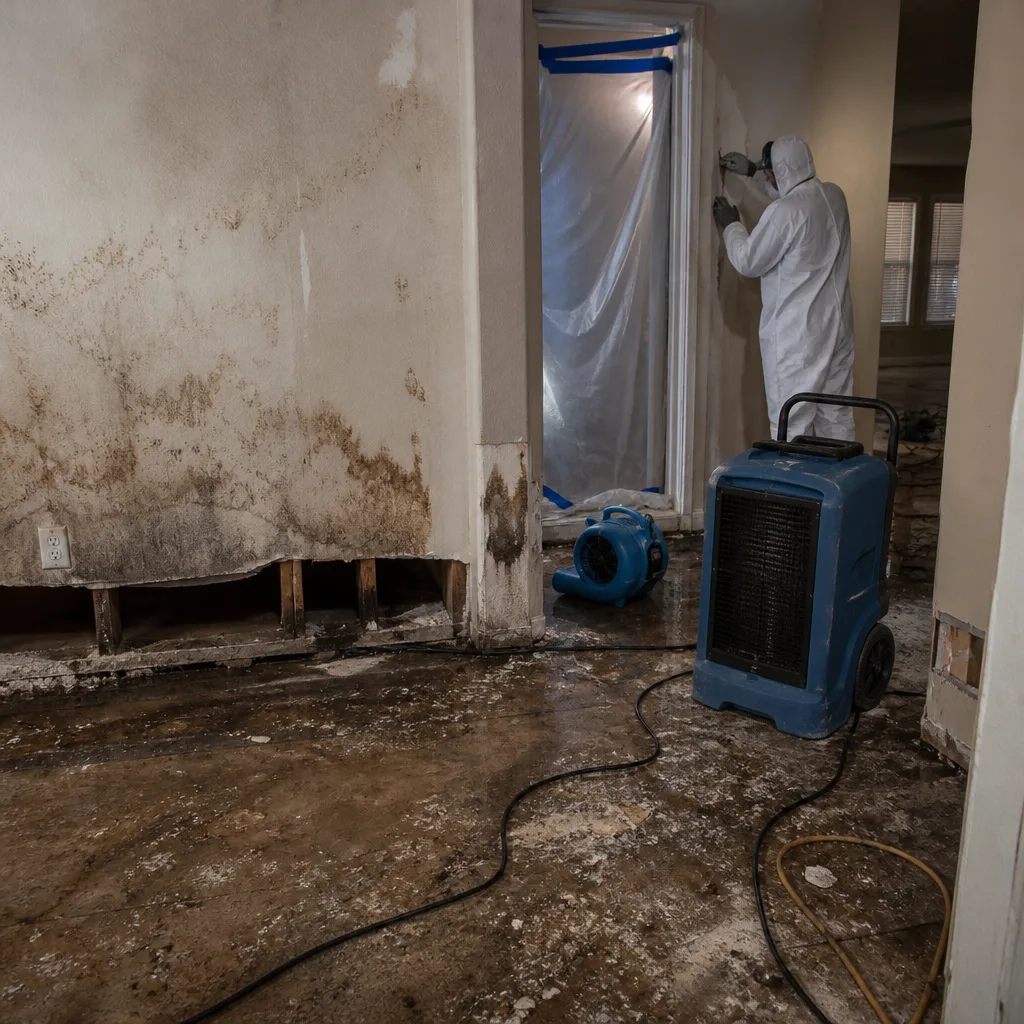 Before
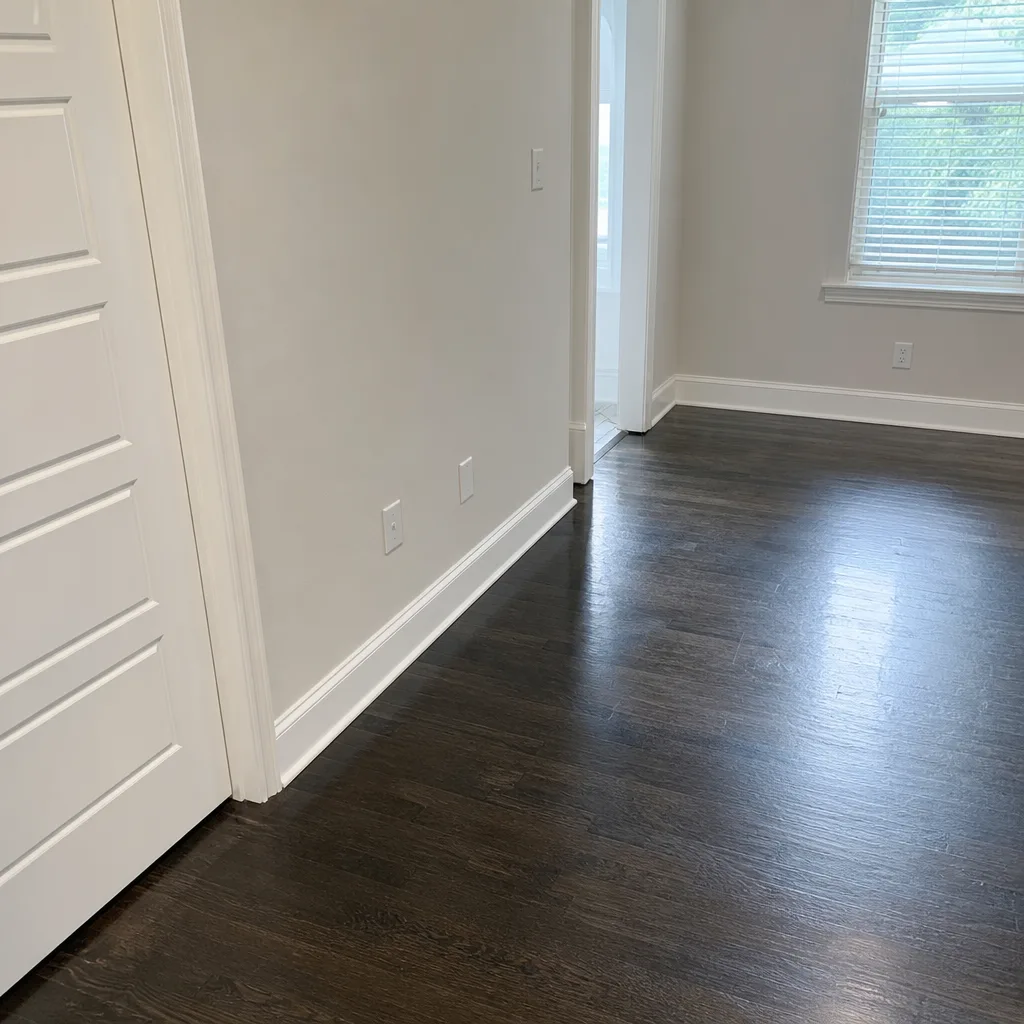 After
After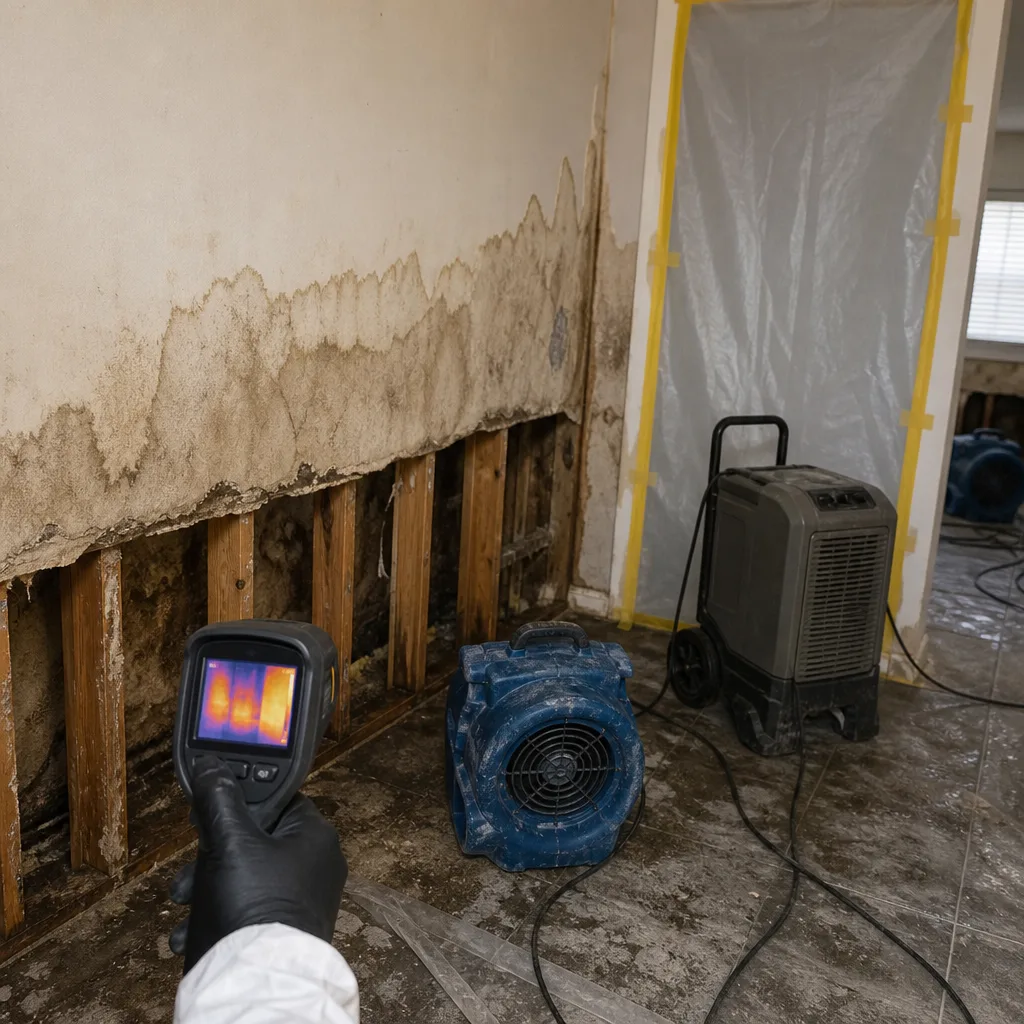 Before
 After
After Before
 After
After