
Last updated October 16, 2026
 Water damage drying
 Fire & smoke cleanup
 Mold remediation
 Storm response
 Sewage cleanup
 Reconstruction
Free visual inspection and a written scope of work before any mitigation begins - photos, moisture readings, and drying logs go in your claim file
The scope we write is the scope we bill. Anything new gets shown to you, in writing, before we touch it.
Get your free estimateSeasonal Damage Restoration Care for Dallas: Year-Round Homeowner’s Guide
Dallas doesn’t actually have four seasons of equal weather risk. It has three dangerous transitions, the February freeze window, the May to June storm surge, and the August humidity peak, bookended by two mild stretches where preparation actually happens. Homeowners who treat those transitions as the real calendar avoid most of the water damage that keeps restoration crews busy in this city. The February 2021 freeze didn’t catch Dallas off guard because it was unpredictable. ERCOT had flagged grid vulnerability years earlier. What caught homeowners off guard was that their preparation plan assumed Texas winters don’t require burst-pipe readiness. That assumption cost Dallas homeowners an estimated $2 billion in property damage. This guide walks through what to do in each window, what it costs, and what actually matters versus what you can skip, building on our Complete Guide to Damage Restoration in Dallas.
Restoration work we handle
Quick Answer
Seasonal damage prevention in Dallas comes down to three preparation windows: mid-January through early February for freeze readiness, late April through May for storm and hail season, and late September through October for slab and exterior sealing before winter ground shifts. Most of the work costs under $300 per season, with the main exception being a backwater valve installation at $800 to $2,000, and a restoration-ready document kit that takes about an hour to build will save you two to three hours of chaos when damage actually happens. For a full breakdown, see our Damage Restoration Cost Breakdown: The Dallas Homeowner’s Reference for 2026.
Table of Contents
- The Real Dallas Calendar: Three Transitions, Not Four Seasons
- The February Freeze Window: January 15 to February 10
- The May to June Storm Surge: Roofs, Sump Pumps, and Backwater Valves
- The August Humidity Peak: Attic Heat, Moisture Migration, and Ventilation
- The October Window: Sealing Exterior Penetrations Before Slab Season
- Building a Restoration-Ready Document Kit
- Common Mistakes to Avoid
- When to Call a Professional
- Frequently Asked Questions
- The Bottom Line
The Real Dallas Calendar: Three Transitions, Not Four Seasons
North Texas sits at the boundary of three climate zones, which is a polite way of saying the weather here is a negotiation between the Gulf, the Plains, and the Chihuahuan Desert. What that means for a homeowner in Dallas is that most structural water damage doesn’t happen during a season. It happens in the two to three weeks when one season gives way to the next. The ground contracts or expands, the air moisture swings by 30 points in a weekend, and the built environment is asked to flex with it.
In our experience at Dryden Restoration Dallas home, homeowners who have been through one Dallas weather event tend to over-prepare for that exact event while ignoring the other two transitions. A family that had a burst pipe in 2021 will insulate every pipe in the house but never think about the attic ventilation problem until August. A family that dealt with hail damage will replace the roof and then forget the sump pump hasn’t been tested in four years. The goal of this guide is to level that out: three windows, three sets of tasks, and a consistent baseline so you’re never scrambling.
What follows is organized by those windows, because that’s how the damage actually arrives in Dallas, not by calendar quarter. Each section covers what to do, what it costs, what we see fail most often in this city, and what’s genuinely optional.
The February Freeze Window: January 15 to February 10
The February 2021 freeze was not an anomaly. It was a warning shot. Records from the National Weather Service show Dallas has experienced a prolonged sub-freezing event roughly once every 8 to 10 years, and the 2021 event, with its sustained 20-degree lows, was the most destructive freeze in the city’s modern history. The damage came from one specific vulnerability: pipes running through exterior walls and unconditioned spaces were never rated for sustained cold because, historically, they didn’t need to be.
Your preparation window is January 15 through February 10. Before that, the forecast is too far out to act on. After that, you’re reacting, and reacting in a Dallas freeze means competing with every other homeowner for plumbers, pipe insulation, and restoration crews.
Three Tasks That Actually Prevent Burst Pipes
- Insulate every exposed or exterior-wall pipe you can reach. Focus on the north-facing walls first. In neighborhoods like Lake Highlands, Richardson, and Far North Dallas, the homes built in the 1970s and 1980s frequently route kitchen and bathroom supply lines through exterior walls with minimal insulation. You can feel the wall temperature drop on a cold morning. Standard foam pipe insulation sleeves run $2 to $6 per six-foot section at any hardware store. For the gaps you can’t reach, a licensed plumber can inject foam insulation into wall cavities for $300 to $800 depending on access, and that’s cheap compared to the average burst-pipe restoration bill, which runs $5,000 to $12,000 in Dallas when the water sits for more than a few hours.
- Know where your main shutoff valve is, and make sure it turns. During the 2021 freeze, we saw homes where the shutoff valve was painted over, rusted, or hidden behind boxes in the garage. That discovery should not happen at 2 a.m. with water spraying from a wall. Find the valve now. It’s usually at the meter box near the curb or on the exterior wall where the service line enters. Turn it a quarter turn and back. If it’s stubborn, call a plumber to replace it for $90 to $200. Then show every adult in the house where it is.
- Plan your drip strategy before the forecast says to do it. The goal of dripping faucets is not to keep a little water moving. It’s to relieve the pressure that builds in a pipe as ice expands. Drip the faucets farthest from the meter or on the coldest, most exposed wall first. In most Dallas ranch homes, that’s a bathroom on the north side. Drip both hot and cold lines, because both are at risk. Also open the cabinet doors under any sink on an exterior wall so conditioned air reaches the pipes. The added utility cost of a drip is pennies per day; the cost of a burst pipe is thousands.
This is also the window to take a photo of your water heater’s manufacturer label and note the age. In Dallas, hard water shortens tank life to an average of 8 to 10 years, and a failing tank in February is the second most common freeze-related call we get after burst supply lines. If your tank is over 10 years old, replacing it before the freeze is $1,200 to $2,200 installed. Replacing it during a freeze, with an emergency call-out and Sheetrock damage from the leak, doubles that.
The May to June Storm Surge: Roofs, Sump Pumps, and Backwater Valves
Dallas storm season is not a maybe. Between May 1 and June 15, the Dallas-Fort Worth metro averages enough severe thunderstorm days that property insurers maintain dedicated Texas hail and wind claims teams. The water damage from this window comes in three forms: wind-driven rain through a compromised roof, flash flooding against a slab foundation, and sewer backup when the storm drain system is overwhelmed.
Your April preparation tasks are where the money is. Here’s what actually matters.
Roof Inspection Timing
Schedule a roof inspection in early April, before the storm surge, not in June when the hail has already found the weak spot. In Dallas, roofing companies are backed up for weeks after the first major hail event, and restoration companies are managing the interior damage from the water that got in during the wait. A pre-season inspection costs $200 to $400 in the Dallas market, and a roofer looking for the specific failures that let in wind-driven rain will check flashing, sealant boots around vent pipes, missing shingles, and the valleys between roof sections. The most common failure point in Dallas storms is not the shingle itself; it’s the nail pop that lets a shingle lift at the leading edge, and the pipe boot that has cracked from UV exposure. Both are $150 to $300 fixes when caught early.
Sump Pump Testing
If your Dallas home has a basement or a below-grade addition, you have a sump pump, and the May storm surge is when that pump earns its keep. Test it by pouring a five-gallon bucket of water into the pit. The pump should kick on and discharge outside within 10 seconds. If it doesn’t, the float switch is the usual culprit, and a replacement pump runs $150 to $400 installed. Homes in the flat-grade neighborhoods of East Dallas, Mesquite, and Garland with basements are particularly dependent on a working pump, because the water table rises quickly during sustained heavy rain.
Backwater Valve Installation: The $800 to $2,000 Investment
Backwater valves are the single most overlooked protection in Dallas storm readiness, and here’s why they matter. The city’s flat terrain and aging storm sewer infrastructure mean that during a major rain event, the sanitary sewer can become the path of least resistance. In neighborhoods built before 1980, where the sanitary and storm drains share capacity, sewage backup into a ground-level shower or floor drain is a known failure mode.
A backwater valve is a one-way flapper installed on your main sewer line that allows flow out but blocks flow coming back. It costs $800 to $2,000 in the Dallas market depending on line depth and access. Is it worth it? If you live in a pre-1980 neighborhood with a ground-level shower, a floor drain, or a finished basement, the cost of one sewage backup restoration, typically $7,000 to $15,000 when you factor in sanitation, demolition, and decontamination, answers that question. We also recommend checking whether your homeowner’s policy has a sewer backup rider; in Dallas, most standard policies exclude it unless specifically added, and that rider is typically $40 to $80 per year.
For storm readiness beyond the structure, water damage restoration in Dallas is what we handle after the weather does its worst, starting with a written scope and a price you get before the tools come out.
The August Humidity Peak: Attic Heat, Moisture Migration, and Ventilation
August in Dallas is the month when the city lives between two numbers: 100 degrees outside and 70% relative humidity. That combination doesn’t just make the air uncomfortable. It creates a moisture drive that pushes water vapor through the building envelope and into the air-conditioned interior. When that vapor meets the cooler drywall and framing, it condenses. Not visibly, at first, but invisibly, inside wall cavities and ceiling assemblies.
The most common place we see August humidity damage in Dallas is the attic. Here is the mechanism: your attic in August can reach 130 to 150 degrees. That superheated air holds moisture. When the sun goes down and the attic cools, the moisture reaches the dew point and condenses on the underside of the roof decking and the insulation. If the attic’s ventilation is insufficient, often the case in homes where the original builder installed the minimum required vent area, that condensation never fully evacuates. Over time, you get mold on the roof sheathing, saturated insulation losing its R-value, and eventually, water stains on the ceiling below.
The $30 Attic Thermometer Test
A $30 attic thermometer with a remote sensor is the cheapest diagnostic tool you’ll buy this year. In July or early August, on a clear day, check the reading at 3 p.m. If your attic is above 140 degrees, and your ventilation system is performing as the builder intended, the attic air should be close to ambient outdoor temperature within 45 minutes after sunset. If the attic is still 20 degrees hotter than outside at 10 p.m., your ventilation is insufficient. That heat differential is what drives moisture into your living spaces.
The fix is usually a combination of ridge vents or a gable vent upgrade, and the cost in Dallas runs $400 to $1,200 depending on the roof profile and the vent type. The benefit is not just moisture control; it’s a measurable reduction in your August cooling load, because your air conditioner is no longer fighting a 150-degree air mass directly above the ceiling.
For homes where the moisture has already moved beyond the attic and into the living envelope, mold remediation in Dallas is the service we detail on a case-by-case basis, always with a written price before the first extraction step.
The October Window: Sealing Exterior Penetrations Before Slab Season
October is the month Dallas homeowners skip. It’s mild, the rain has mostly stopped, and the urgency of summer is behind you. But it’s the single most important preparation window of the year for foundation-adjacent damage, and here’s why: Dallas sits on expansive clay soil, the kind that swells when wet and shrinks hard when dry. In the fall, after the summer heat has baked the ground for three months, the soil under your slab is at its driest. When the first cold fronts arrive in November and the soil contracts further, the slab settles slightly. This is normal. The problem is that the exterior penetrations in your home, where plumbing, electrical conduit, and gas lines pass through the foundation or exterior walls, were sealed when the soil was at a different volume.
As the slab shifts that first inch in October and November, those penetrations can develop hairline gaps. A hairline gap in October becomes a water entry point in February when the freeze hits, or in March when the spring rains start. What begins as a tiny floor crack near an exterior wall becomes a path for moisture, and in a slab foundation, that moisture travels horizontally to the nearest interior wall cavity.
October Sealing Checklist
- Walk the exterior foundation line. Look for gaps where the brick veneer or siding meets the slab. Any gap wider than a dime is a candidate for a flexible sealant. In Dallas, that’s a polyurethane or silicone product rated for concrete and masonry, $8 to $15 per tube.
- Check pipe penetrations. The water service line, sewer line, and any conduit entering through the foundation wall are the top candidates for gaps after slab movement. The sealant around them should be intact, not cracked or pulled away. Re-caulking takes an hour.
- Examine hose bibs and exterior faucets. The seal where the pipe exits the wall is exposed to every Dallas summer’s UV and every winter’s contraction. A failed seal here shows up as a water stain on the interior wall directly behind the faucet. Re-caulk with an exterior-grade product.
- Inspect window wells and door thresholds. The ground settles away from the foundation, not toward it, but the area directly around foundations often develops a depression where water can pool against the slab. Regrade if you can, and seal any visible gap between the threshold and the concrete.
The total cost of an October sealing pass is under $100 in materials and a Saturday afternoon. The cost it prevents, in our experience with Dallas slab homes, is a $3,000 to $8,000 moisture remediation when a small leak goes unnoticed through the winter.
Building a Restoration-Ready Document Kit
When water damage happens in Dallas, at any time of year, the first two hours determine most of the final cost. The water is moving through materials, the clock is running, and the homeowners who have to search for their insurance policy or figure out where the shutoff valve is while the damage spreads are the ones who end up with the longest restorations, and the highest bills.
A restoration-ready document kit takes about an hour to assemble. It belongs in a physical folder and a secure cloud file, because a house fire takes the physical folder too. Here’s what goes in it:
- Insurance policy number and the direct claims phone line. Not the agent’s name, not a general customer service number. The claims number that processes damage claims. Your agent sells you the policy; the claims department opens the claim.
- Shutoff locations with photos. A photo of the main water shutoff valve, the gas shutoff, and the electrical panel, each with a caption showing where they are in the house. When you’re on the phone with a restoration company or an insurance adjuster, and they ask where the water main is, a photo answers it immediately.
- A baseline photo inventory. Ten to fifteen photos of each major room, taken on a normal day, stored in the cloud. When damage happens, these photos are your proof of condition. They also help an adjuster assess scope more accurately.
- Your preferred restoration contractor’s phone number. Before you need it. Not after the water is running. The company you call should answer live, 24 hours a day, because a restoration emergency doesn’t keep business hours. Dryden’s live phone line, (940) 468-1166, is answered by a person at every hour, and that’s a specific commitment we make to Dallas homeowners.
- Copies of any existing inspection reports. Roof, HVAC, plumbing, or foundation reports from the last three years. They establish a maintenance baseline that’s useful for an adjuster and for any restoration contractor doing the scope.
This kit is the difference between making two phone calls and spending a panicked hour searching. We’ve seen the difference in Dallas flood events, and it’s measured in hours of damage extension, not just convenience.
For the restoration itself, when you do need a live person, we answer the phone at Water Damage Restoration in Dallas with a real name and a real dispatch process, not a recording that promises a callback.
Common Mistakes to Avoid
- Preparing for the last disaster instead of the next one. Every Dallas homeowner we talk to who had a pipe freeze in 2021 spent the next year obsessed with pipe insulation and skipped the roof inspection. The weather doesn’t repeat itself on your schedule.
- Testing the sump pump in May and never again. A sump pump can fail in October just as easily as in May. Test it quarterly, and replace it every five years in Dallas’s hard-water environment.
- Assuming a standard homeowners policy covers sewer backup or flood. In Dallas, it typically doesn’t. Sewer backup requires a rider, and flood damage requires separate flood insurance. Check your policy before the storm, not after.
- Waiting for visible water damage to act. By the time a water stain appears on a Dallas ceiling, the moisture has been behind that drywall for days or weeks, and mold is already established. The time to investigate is when the humidity feels wrong, not when the ceiling discolors.
- Using the wrong sealant for foundation gaps. Standard latex caulk fails on Dallas expansive soil within a season. You need a flexible polyurethane or silicone sealant rated for concrete and movement, or you’ll be re-doing the work in March.
- Not documenting your baseline condition. The photo inventory is the cheapest insurance policy you’ll ever create. Without it, your adjuster starts from zero, and so does your restoration contractor.
When to Call a Professional
Some conditions in Dallas are homeowner maintenance. Some are restoration situations. The line is usually visible: if water is actively entering the home, if there is a sewage component, if you smell gas, or if you see mold growth larger than a dinner plate, call a professional before you touch anything else. In a slab home, unexplained dampness across multiple rooms, not just a single spot, usually means a plumbing leak inside the slab or a ground moisture issue, and that requires diagnostic equipment you don’t have in the garage. For fire or smoke damage, fire damage restoration in Dallas involves structural concerns that need a professional assessment before you re-enter. Dryden Restoration Dallas offers free estimates in Dallas; call (940) 468-1166, and a human answers, any hour, any day.
Frequently Asked Questions
In the Dallas market, water damage restoration typically runs $2,500 to $6,000 for a contained, single-room event that’s caught within hours, while whole-home flooding or long-standing leaks run $10,000 to $25,000 or more once you include demolition, drying, and rebuild. The biggest variable is time: water that sits for more than 24 hours doubles or triples the cost. Call (940) 468-1166 for an exact written estimate, which is always free and always provided before any work begins.
Stop the water source, which usually means turning off the main shutoff valve, then call a restoration company that answers live, because the first two hours determine how much of the damage is recoverable. Document everything with photos, and if the damage is from a covered peril, call your insurance claims line directly, not your agent. The restoration company can coordinate with your adjuster if they’re experienced, and Dryden does that every day in Dallas.
In pre-1980 Dallas neighborhoods where the storm and sanitary sewers share capacity, a backwater valve is not overkill. It’s a one-way valve on your sewer line that prevents city sewage from backing up into ground-level drains during heavy rain, and at $800 to $2,000 installed, it’s significantly cheaper than the $7,000 to $15,000 restoration bill from a single sewage backup. Check with your plumber on your specific line configuration.
Put a $30 remote-sensor thermometer in your attic, check it at 3 p.m. on a clear August day, and again at 10 p.m. If the attic is still 20 degrees hotter than the outside air by 10 p.m., the ventilation is insufficient, and that excess heat is driving moisture into your living spaces. The fix is usually a ridge or gable vent upgrade, $400 to $1,200 in Dallas.
Homeowners insurance in Dallas typically covers sudden, accidental water damage from burst pipes, appliance failures, and storm-related roof intrusion. It does not cover flood water entering from outside during a flood event, and it usually does not cover sewer backup unless you have a specific rider. Maintenance failures, like a slow pipe leak that you ignored, are typically excluded. Check your policy now to know what’s covered.
We answer the phone live, 24 hours a day, 7 days a week, and in most Dallas neighborhoods we can have a technician on-site the same day you call, with a written price before any work starts. The specific arrival window depends on call volume and your location in the Dallas area, but the commitment to answer the phone in person never changes. Call (940) 468-1166 and you’ll hear a human voice.
The Bottom Line
Dallas homeowners don’t need to live in fear of the weather, but they do need to respect the transitions. January through February for freeze readiness, April through May for storm season, July through August for humidity and attic ventilation, and October for exterior sealing and slab work. That’s a preparation calendar that matches the real risks of this city, not the generic four-season model. What separates the homeowners who spend $300 a year on prevention from the ones who spend $15,000 on restoration is not luck, not a bigger budget, but a schedule. Build your restoration-ready document kit this month, whatever month you’re reading this in. Walk your exterior line. Find your shutoff valve. And when damage does happen, you already know who to call.
Written by Carl Brandt, Owner at Dryden Restoration Dallas, serving Dallas since 2005.
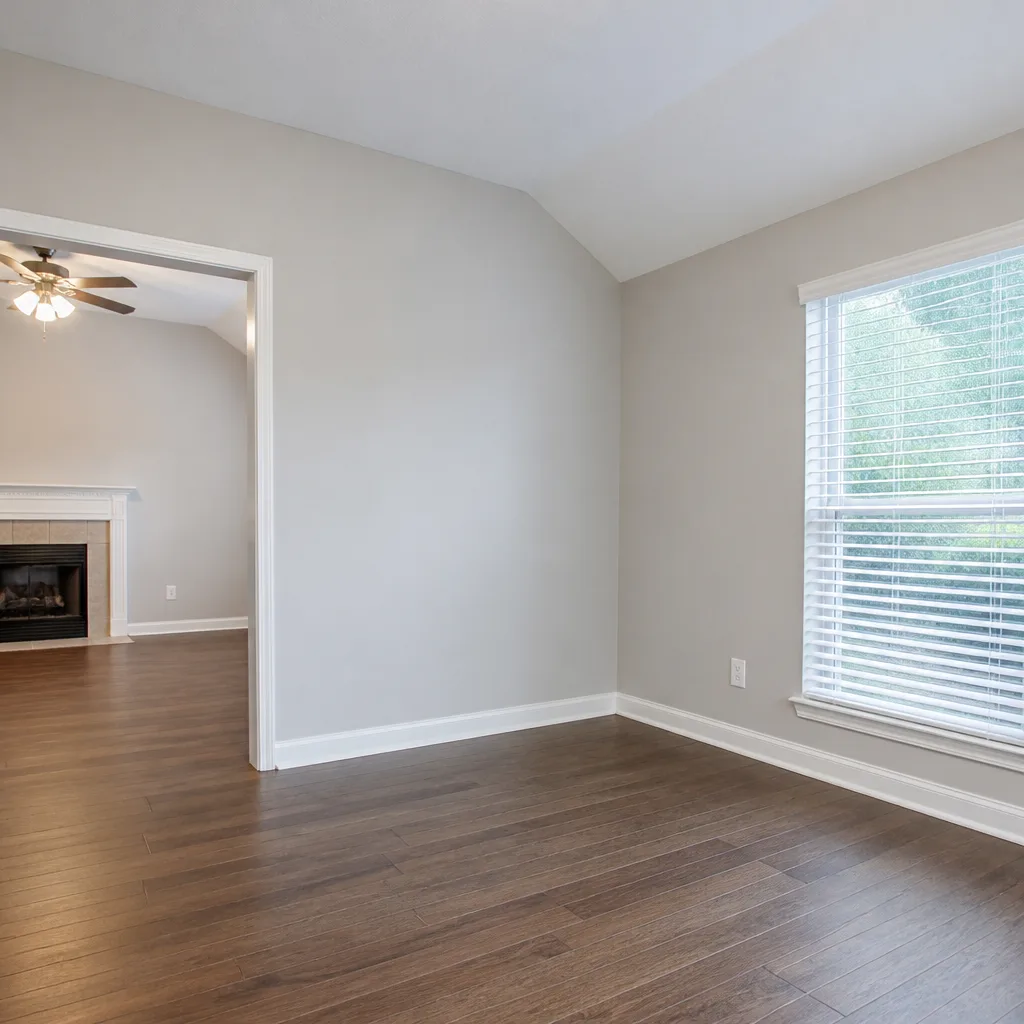
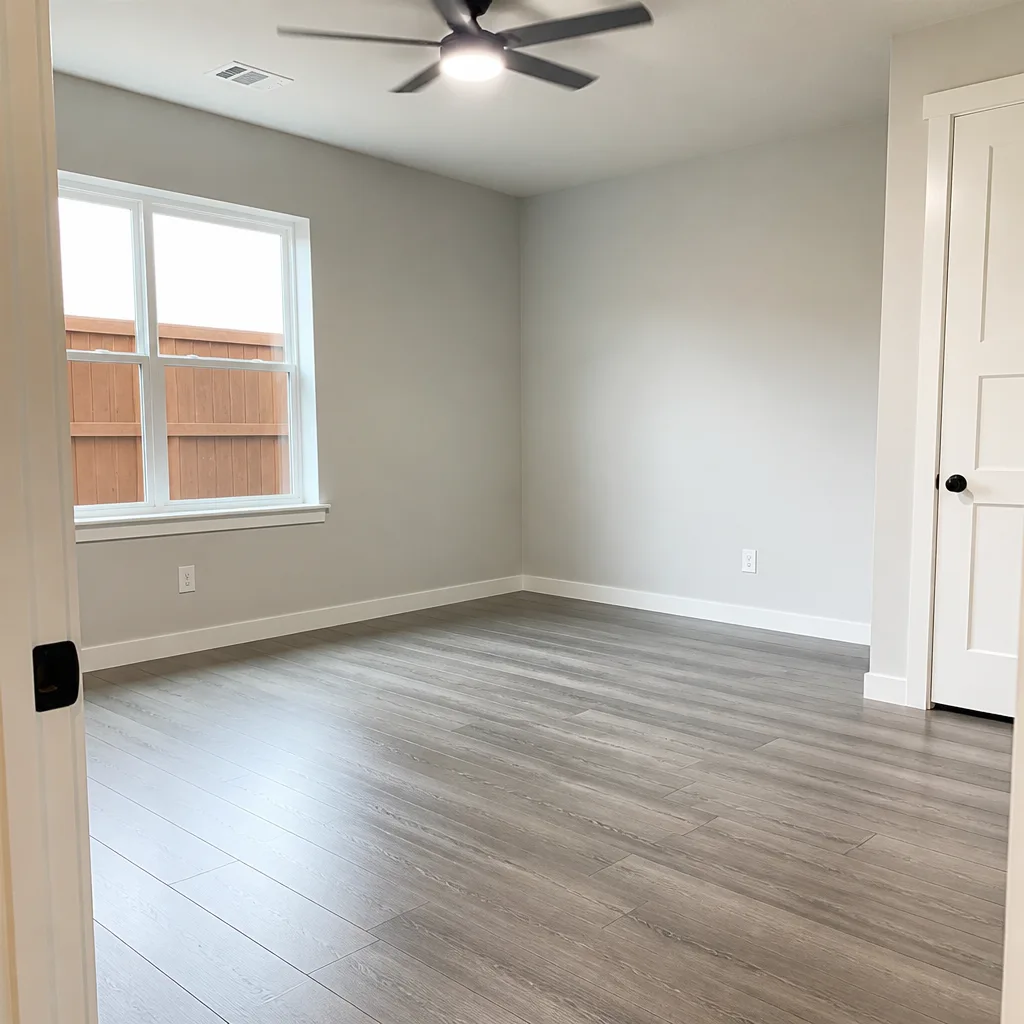
See the difference
 Before
 After
After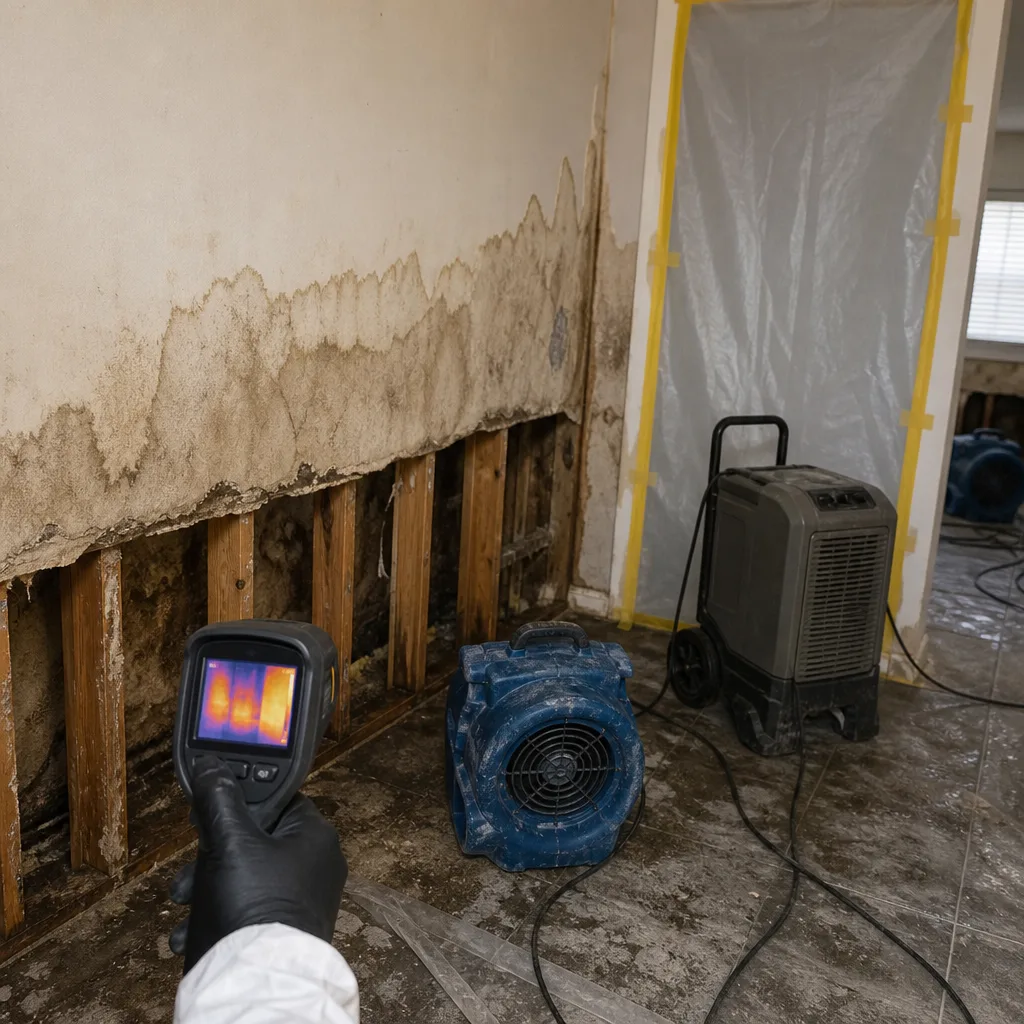 Before
 After
After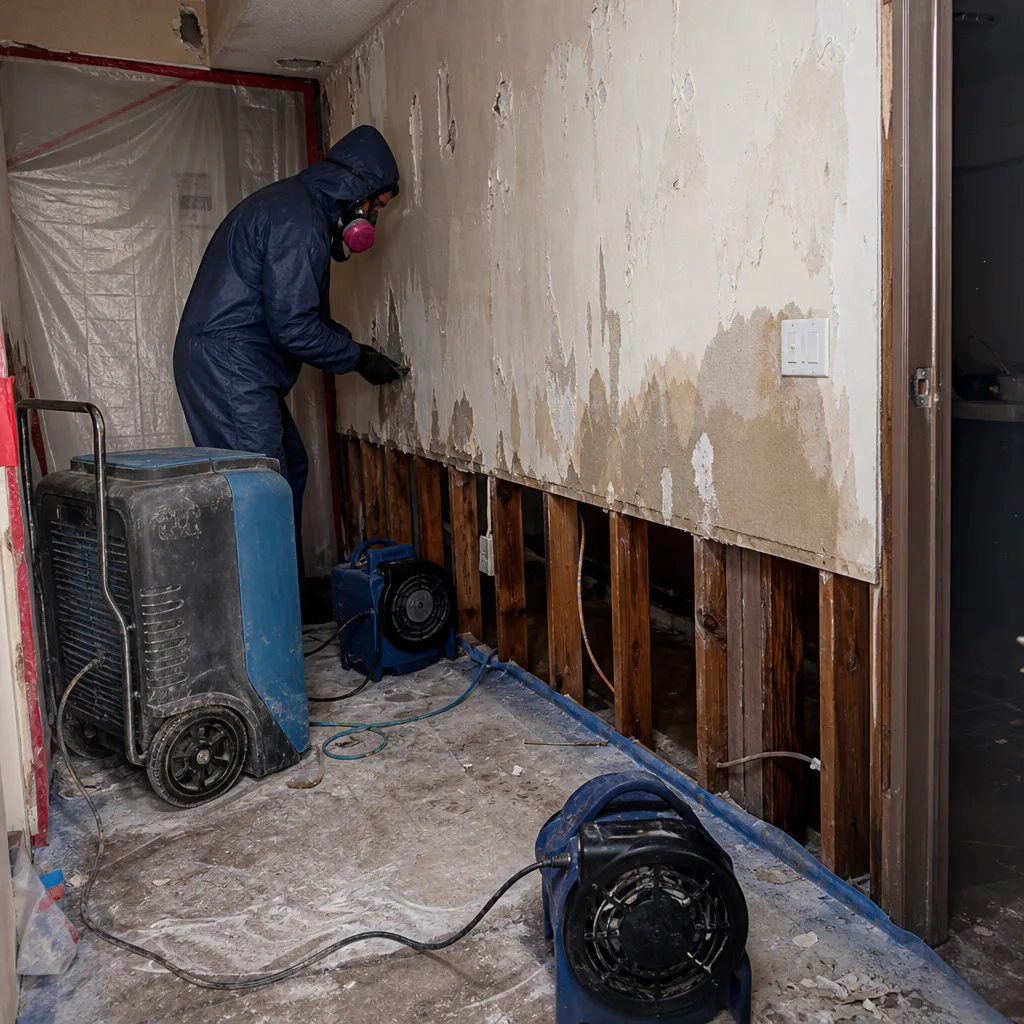 Before
 After
After