
Last updated October 16, 2026
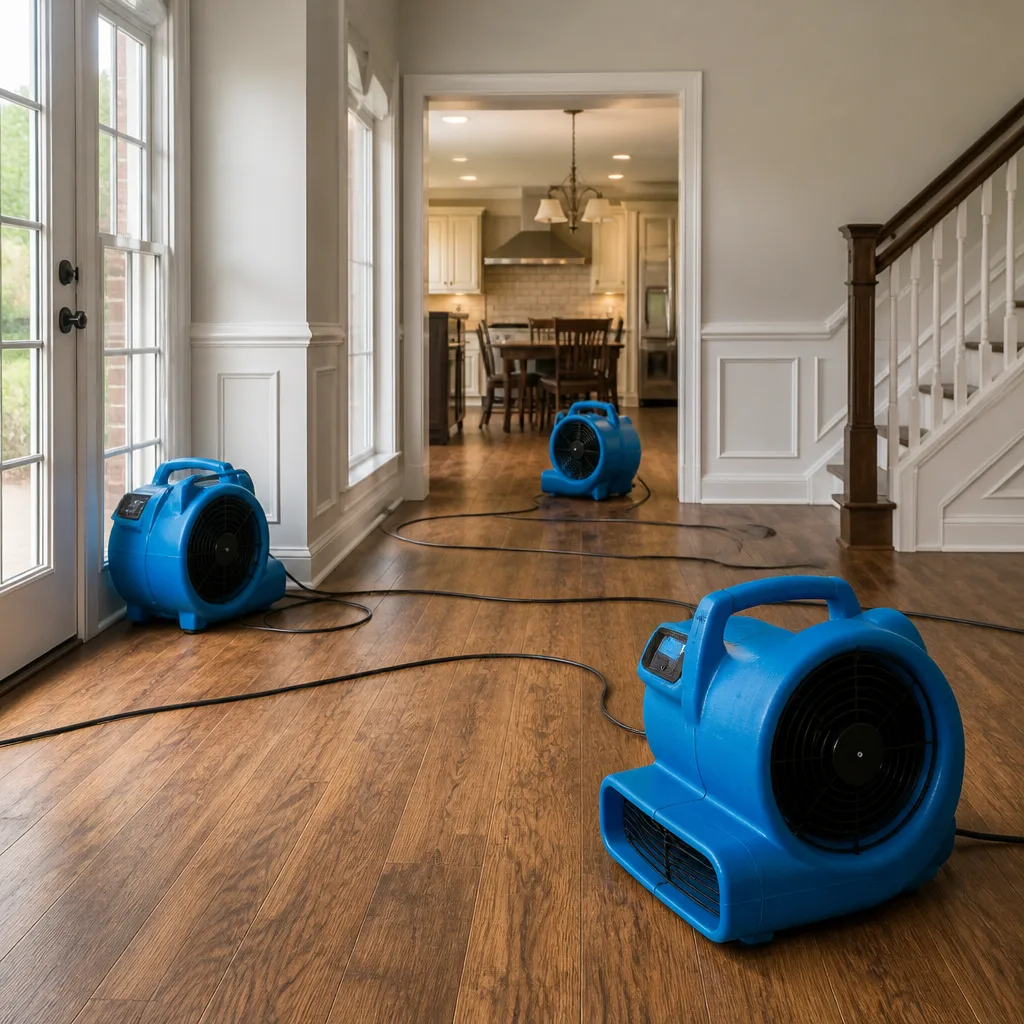 Water damage drying
 Fire & smoke cleanup
 Mold remediation
 Storm response
 Sewage cleanup
 Reconstruction
Free visual inspection and a written scope of work before any mitigation begins - photos, moisture readings, and drying logs go in your claim file
The scope we write is the scope we bill. Anything new gets shown to you, in writing, before we touch it.
Get your free estimateDamage Restoration Warning Signs: A Dallas Homeowner’s Reference Guide
A door that started sticking in July and a musty smell that appears only when the AC runs are two unconnected annoyances. Or they’re the same slab leak expressing itself through your foundation and your ductwork at the same time. Dallas’s expansive clay soil, which shrinks and swells dramatically with moisture changes, means these signals are connected more often than homeowners realize. This reference guide is organized by location in your home, not by damage type, because that’s how you’ll actually notice problems: room by room, wall by wall, in the order you live your life. We’ve spent two decades tracing these signals back to their sources in Dallas homes, and we’ll walk you through what matters, what doesn’t, and what can’t wait.
Quick Answer
Water damage in Dallas homes usually announces itself weeks or months before visible water appears through subtle, location-specific signals: hairline cracks at doorframe corners, sulfur notes in tap water, damp AC drip pans between cycles, and baseboards that bubble or warp without an obvious spill. A $25 or higher unexplained monthly water bill increase, a musty smell that appears only when the HVAC runs, or any horizontal crack in brick or drywall should trigger a professional inspection within 48 hours. Most of these early signs are repairable for under $800 if caught before they reach the foundation, framing, or electrical systems.
Restoration work we handle
Table of Contents
- Foundation and Slab Warning Signs
- Bathroom and Kitchen Warning Signs
- Bedrooms and Living Areas
- HVAC, Attic, and Crawlspace Signals
- Reading Your Utility Bills for Water Damage
- Smell Mapping: What Different Musty Odors Mean
- Triage: 48-Hour Emergency vs. Schedule-In-Two-Weeks
- Common Mistakes to Avoid
- When to Call a Professional
- Frequently Asked Questions
Foundation and Slab Warning Signs
Dallas sits on the Eagle Ford Shale and Taylor Marl formations, clay-heavy soils that can swell up to 40% in volume when saturated and shrink again when dry. That means your foundation moves seasonally whether or not you have a water problem. The skill is telling normal movement from water-driven distress, and the difference usually shows in the pattern and location of cracks.
Normal Dallas foundation movement shows up as hairline cracks at 45-degree angles from window corners, often appearing in summer and closing slightly in winter. These are stress-relief points in the drywall and typically stay under 1/16 inch wide. They don’t widen month over month, and they don’t come with other symptoms. Water-driven foundation distress looks different. Horizontal cracks in exterior brick or interior drywall are never normal. Stair-step cracks in brick that follow the mortar joints, especially below a window or near a corner, mean water is softening the soil unevenly and the footing is rotating. In our experience across Dallas neighborhoods from Lakewood to Richardson, a stair-step crack wider than a dime is a call to a foundation engineer, and a water-damage inspection should happen the same week.
Doorframe corners are one of the most overlooked early signals in slab homes. When a door that used to latch cleanly starts sticking at the top corner in summer, or a gap opens above the door on the hinge side, that corner of the slab is moving. A single sticking door might be humidity. Two or more doors on the same floor, or a door that sticks and a nearby window that’s suddenly hard to open, suggests moisture is changing the soil load under the slab. That moisture has a source: a pinhole leak in a copper line under the slab, a failed irrigation valve against the foundation, or a downspout dumping water at one corner. The damage restoration question is which one, because each has a different fix and a different insurance story.
We look for one more slab signal that’s easy to miss: baseboards pulling away from the floor along an exterior wall while staying attached at the top. That separation means the slab edge is sinking or heaving faster than the wall can follow, and the gap is often widest in the same spot where the floor feels cool under bare feet in summer. If you’re seeing this, start with our Water Damage Restoration in Dallas guide for what an inspection actually involves, including how we trace the source before anyone touches drywall.
Bathroom and Kitchen Warning Signs
Bathrooms are the most common origin point for water damage in Dallas homes, but not always for the reason people assume. Yes, supply lines fail and shower pans crack. But the more frequent culprit in our experience is grout and caulk failure at the tub-to-floor transition, driven by Dallas’s seasonal humidity swings that flex and dry out sealant faster than in coastal climates.
A bubbling baseboard in a bathroom directly above another bathroom or kitchen usually means a supply line or drain leak inside the wall cavity or under the floor. Paint bubbles, soft drywall, or a slight bulge are the water finding the path of least resistance to the bottom plate of the wall. That’s a 48-hour situation, because the water is trapped in a dark, warm cavity and mold can begin in 24 to 48 hours. A bubbling baseboard in a first-floor bedroom with no plumbing above it points to a slab leak or an exterior wall moisture intrusion, and that changes both the repair scope and the urgency. For more on what a slab-side repair involves, see our Mold Remediation in Dallas page, which covers how we dry and treat wall cavities before rebuild.
In kitchens, watch for these specific signals. Cabinets that have begun to delaminate at the bottom edge near the sink base, even if the interior feels dry. A dishwasher that leaves a small puddle at the door gasket only on certain cycles, which often means a failing seal that wets the subfloor slowly over weeks. Tile that sounds hollow when tapped with a butter knife, which means the thinset bond has failed and water may have reached the substrate. And a garbage disposal that has begun to drip at the reset button on the bottom, which is an early sign the internal seals are gone and water is running through the motor housing onto the cabinet floor.
We recommend this simple sequence when you spot a bathroom or kitchen signal:
- Stop using the fixture for 24 hours if the signal involves a drain or supply line. If the bubble or damp spot shrinks, you’ve isolated the source.
- Wipe and mark the boundary of any damp area with painter’s tape. Recheck in 24 hours. Growth past the tape means active water.
- Check the water meter for movement with all fixtures off. If the small red triangle or low-flow dial is spinning, you have a leak somewhere on your side of the meter.
- Photograph everything before you call anyone. Insurance adjusters and restoration estimators both work better from dated photos taken before demolition.
- If the area smells like wet drywall or has developed any gray or green surface growth, treat it as a mold concern and stop using the room until it’s assessed.
Bedrooms and Living Areas
Bedrooms and living areas with no plumbing fixtures are where Dallas homeowners get blindsided, because the assumption is “no pipes, no problem.” But the moisture sources in these rooms are many: exterior wall intrusion from failed flashing, AC condensate from attic units, leaking windows, and slab leaks that travel under the floor and wick up through the carpet pad.
The first bedroom signal we teach homeowners to look for is carpet that stays damp or smells musty near an exterior wall, especially after a hard Dallas thunderstorm. The cause is usually one of three things: a weep hole that’s been covered by soil or mulch, a window that’s lost its seal at the bottom corners, or a roof leak that’s running down the inside of the exterior wall and soaking the sill plate. The first two are relatively cheap fixes. The roof leak, left alone, rots the top plate and the wall studs, and that’s a deck-and-framing repair that can run $2,500 to $6,000 depending on the wall’s load-bearing role.
Windows themselves are a diagnostic tool. Condensation between the panes means the insulated glass unit (IGU) has failed, and while that’s a window replacement issue, persistent condensation on the inside surface of a window on only one wall of the house, while other windows are dry, points to elevated indoor relative humidity from a moisture source near that wall. We use psychrometric readings, which is to say we measure the actual moisture content of the air and the surfaces, not just whether something feels damp, to separate a humidity problem from an active water source.
A signal that’s commonly written off as normal wear: paint that has begun to lift along the bottom 6 inches of baseboards in a bedroom, especially if there’s no bathroom above. That lower trim is acting like a wick, and the moisture source is either in the wall or under the floor. If both the baseboard paint is lifting and the room has a faintly sweet, earthy smell when the door has been closed overnight, that’s the signature of a slow slab leak under the bedroom, and the pad under the carpet is already wet. The carpet may feel dry on top. The pad is not.
For living areas, pay attention to any drywall seam that has begun to show a hairline crack in a perfectly straight vertical or horizontal line. Drywall seams fail from movement, and while some movement is normal in a Dallas slab home, a seam that opens in a straight line along a wall’s length, combined with any door sticking on that same wall plane, suggests the wall is being pushed or pulled by water-saturated soil outside. We’d rather be called early on these than called after the baseboard has turned to sponge.
HVAC, Attic, and Crawlspace Signals
The air conditioner in a Dallas home runs hard from May through October, and it creates a moisture source that most homeowners never think about until water appears on a ceiling. An AC coil that’s slightly low on refrigerant will begin to produce excess condensation, and the drip pan beneath it is the canary in the coal mine. If you can see your drip pan from an access hatch, it should be dry or nearly dry between cooling cycles. A pan that stays wet between cycles, or a pan that has standing water in it even when the unit has been off for an hour, means the condensate line is partially clogged or the coil is freezing and thawing, and that water is either overflowing or wicking into the insulation and drywall around the plenum.
A musty smell that appears only when the HVAC runs is a different signal from a constant musty smell, and it’s one of the most useful diagnostic clues in a Dallas home. If the smell comes through the vents only during cooling cycles, the source is most likely the evaporator coil or the drip pan: microbial growth in the damp, dark interior of the air handler, blowing that smell through every room the unit serves. If the smell is present all the time regardless of HVAC, the source is more likely in the building materials: wet drywall, wet carpet pad, or a wall cavity that’s holding moisture. And if the smell is strong near one wall only and doesn’t move, that’s a localized source behind or under that specific area.
Attic signals are easy to ignore because most Dallas homeowners go up there once or twice a year. We recommend a deliberate check in fall and spring. Here’s what to look for in order of severity:
- Dark stains on roof sheathing that follow the slope of the roof: an active or past roof leak. If the stain is dry and hard, the leak may have been fixed. If it’s soft or smells like wet wood, it’s active.
- Rust on any metal brackets, straps, or nail heads in the attic: elevated attic humidity, often from a bathroom exhaust fan venting into the attic instead of through the roof. That’s a code violation in Dallas and a slow, year-round moisture source.
- Water stains on insulation that are dark in the center and lighter at the edges: the water dripped onto the insulation and evaporated, leaving mineral deposits. Trace upward to find the entry point.
- Standing water in the overflow pan under a horizontal air handler, or a pan with a wet ring: the primary drain is clogged and the unit is relying on the overflow, which means it’s one hot day away from spilling into your ceiling.
- Mold on the underside of the roof deck, especially near the eaves where ventilation is poorest: a ventilation failure, and it will not go away on its own.
Crawlspace homes are less common in Dallas than slab-on-grade, but they exist throughout East Dallas and the M Streets, and they have their own signal set. Standing water in a crawlspace is obviously a problem. Less obvious is a vapor barrier that’s missing or folded back, which lets ground moisture rise into the floor framing all year. A musty smell that’s stronger on the first floor than the second, and stronger when the weather is humid, often traces to a crawlspace vapor barrier issue rather than a leak. And a floor that feels soft or springy in one spot, with no bathroom above, is likely a joist that’s been slowly rotting from persistent crawlspace moisture. If you’re in a crawlspace home and the smell is musty year-round, run a dehumidifier while you arrange an assessment. It won’t fix the source, but it slows the rot.
Reading Your Utility Bills for Water Damage
Your water bill is a diagnostic instrument, and most Dallas homeowners read only the total. The number to watch is not the dollar amount, it’s the change from your personal baseline. A $25 or higher unexplained monthly increase in water usage, with no new irrigation schedule, no filled pool, and no houseguests, suggests a leak somewhere on your side of the meter. That leak could be a running toilet, which is cheap and easy to fix, or it could be a slab leak, which is neither. The way to tell without opening a wall: turn off every fixture and appliance, including the icemaker and the irrigation system, then watch the water meter’s low-flow indicator. If it’s moving, you have a leak. If it moves faster when you shut off the house’s main shutoff valve but leave the irrigation on, the leak is in the irrigation line. If it moves regardless, the leak is inside the house’s supply plumbing.
We see this pattern in Dallas homes more often than we’d like: a homeowner notices the water bill crept up by $30 a month, writes it off as a rate increase, and discovers a slab leak six months later when the floor in the hallway starts to feel warm. City of Dallas water rates have increased in recent years, which makes bill-based detection harder, but a usage increase measured in gallons is not a rate issue. Look at the usage number, not just the dollar total.
The electric bill has its own story to tell. A $40 or higher monthly electric increase during cooling season, with no new appliances, suggests the AC system is working harder than it should be. One common cause: a clogged condensate line or failing drip pan that’s adding moisture to the air handler area, which reduces coil efficiency and forces longer run cycles. Another: water-damaged insulation in the attic that’s lost its R-value and is letting heat in. Either way, the electric and the water damage are connected, and the fix is the same: find the moisture source and dry the space properly.
For more on how we approach these situations, including what a typical Water Damage Restoration in Dallas job involves from first call to final walkthrough, visit our restoration service page.
Smell Mapping: What Different Musty Odors Mean
Smell is an underrated diagnostic tool, and in Dallas homes it’s especially useful because our long cooling season means the HVAC acts as a smell distribution system. The key is not just that something smells musty, it’s where and when the smell appears.
- Musty smell near one wall only, all the time: a localized moisture source inside or behind that wall. The smell doesn’t move because the water doesn’t move. Common sources: a slow drain leak in the wall cavity, a failed window seal, or a roof leak running down the inside of that wall. This is the pattern we see most often in bathrooms and under exterior windows.
- Musty smell throughout the house, all the time: a whole-house moisture problem, usually either a crawlspace with a failed vapor barrier, elevated indoor humidity from a damp slab, or mold that has spread through the HVAC system. When the whole house smells, we start with the air handler and the crawlspace, because those are the two biggest distribution points.
- Musty smell only when the HVAC runs: growth in the air handler, coil, drip pan, or ductwork. The smell is being manufactured inside the system and distributed only when the fan blows. This one matters because it can spread spores to every room, but it’s also often the most contained repair: clean or replace the affected components and the smell disappears.
- Musty smell stronger at night or in the morning: thermal cycling. As the house cools, air contracts and pulls moisture from wall cavities or the slab into the living space. A smell that’s stronger in the early morning, before the AC has been running long, often means the moisture source is in the building materials themselves, not in the HVAC.
- Sulfur notes in tap water: a different smell entirely, but worth mentioning here because homeowners often confuse it with a sewage smell. Sulfur or rotten-egg odor in tap water, especially from the hot side only, usually means bacterial activity in the water heater or a failing anode rod. If the smell comes from both hot and cold, and only at one fixture, the issue may be in that fixture’s drain trap. If it’s throughout the house on cold water, call the water department and a plumber, because it may be a supply-side issue.
We always ask homeowners to describe the smell in their own words before we visit. “Musty,” “earthy,” “like a wet sock,” “like a basement” (even in a house with no basement), and “like mildew on a towel left in the washer” all point to different moisture sources. The more specific you can be, the faster the diagnosis. And if you’re smelling what seems like a sewage odor, treat it as a plumbing issue first: a dried-out P-trap, a failing wax ring, or a vent stack problem. Sewage gas is not the same as water damage, and the fix is different.
Triage: 48-Hour Emergency vs. Schedule-In-Two-Weeks
Here’s a plain-English triage guide for Dallas homeowners. We use these thresholds on every call, and they’ve kept thousands of homes from tipping from a repair into a rebuild.
Call within 48 hours (these are emergency situations):
- Standing water anywhere in the house that’s more than you can soak up with towels in 10 minutes.
- Water coming through a ceiling, regardless of the room or the amount.
- Any visible mold growth larger than a dinner plate, especially if someone in the home has asthma, allergies, or a compromised immune system.
- A sewage smell that’s confirmed not to be a dry P-trap, combined with slow drains or gurgling toilets.
- A water bill spike of $75 or more in a single month with no explanation, especially on a slab foundation.
- A floor that has begun to feel soft, spongy, or warm in one spot, which can mean a hot water slab leak actively eroding the subfloor.
Schedule within two weeks (these are urgent but not immediate):
- A consistent $25 to $50 monthly water bill increase that you’ve verified with the meter test described above.
- A musty smell that appears only when the HVAC runs, without other symptoms.
- A door that has started sticking at the top corner, with no visible water anywhere.
- Baseboards that have begun to pull away from the floor along one wall, without visible dampness.
- A drip pan that stays wet between cycles, without overflow.
- Grout that has begun to crack or crumble in a shower floor, with no visible leaking below.
The difference between these two lists is the rate of active damage. The emergency list means water or mold is actively spreading or causing structural stress right now. The two-week list means you’ve caught an early signal, and the house can tolerate another week or two while you get someone scheduled. But here’s the caveat: if a two-week item gets worse, it becomes a 48-hour item. If that sticking door starts sticking harder, if that baseboard gap widens, if that musty smell gets stronger, move it up the list. The cost difference between catching a slab leak early and catching it after the floor has buckled can be $4,000 to $12,000, and we’ve seen it play out both ways in Dallas neighborhoods from Oak Cliff to Far North Dallas.
Common Mistakes to Avoid
- Painting over a water stain without finding the source. The stain will come back, and you’ll have hidden the evidence that would have helped diagnose the problem. A water stain is a map. Read it before you erase it.
- Assuming a “small” leak is a “small” problem. In a Dallas slab home, a pinhole leak under the foundation is a small leak that can run for months, saturating the soil, shifting the slab, and rotting the subfloor before you ever see a drop of water. Small leak, big geography.
- Running a box fan on wet carpet in an attempt to dry it yourself. A box fan moves air but does not remove moisture, and it does not reach the carpet pad or the subfloor. Within 48 hours, that wet pad becomes a mold factory. Professional drying uses psychrometric-logging equipment, which is to say meters that measure the actual moisture content of materials, to know when the structure is actually dry, not just dry to the touch.
- Waiting to file an insurance claim until you’ve already started repairs. Most homeowner policies require you to mitigate further damage and to document the damage before repairs begin. If you tear out drywall before the adjuster sees it, you may have destroyed the evidence that would have supported your claim. Take photos, call your insurer, then repair.
- Ignoring a sticking door because “all Dallas houses settle.” Some settling is normal. A door that sticks and a baseboard that’s pulling away on the same wall plane, at the same time, is not. That’s a pattern, and patterns have sources.
- Replacing a musty-smelling AC coil without fixing the drip pan or condensate line. The new coil will smell the same within months because the moisture source is still there. The fix is the drainage, not just the component.
- Relying on a home inspector’s one-time report from when you bought the house. Inspectors are generalists and they’re working against a clock. A moisture issue that was not visible on inspection day may have been active for months. If you’re seeing signals now, get a focused assessment, not a comparison to the old report.
When to Call a Professional
You can handle a dry P-trap or a running toilet yourself. You should not handle any of the following alone: water coming through a ceiling, any visible mold larger than a dinner plate, a sewage smell you can’t trace to a dry trap, a slab leak of any kind, or water that has soaked into drywall, carpet pad, or cabinets and been there more than 48 hours. These situations involve structural drying, mold prevention, and often insurance coordination, and the cost of getting it wrong is measured in bearing walls and air quality. Dryden Restoration Dallas offers free estimates in Dallas and the surrounding suburbs. Call (940) 468-1166 and a live person will answer, any hour, any day. We’ll explain what we’re looking for, what we find, and what it costs, in writing, before any work begins.
If you suspect you’re dealing with a fire or smoke issue instead, our Fire Damage Restoration in Dallas guide covers the unique signals and cleanup process for that path. And for the mold questions that follow any water event, see our Mold Remediation in Dallas page.
Frequently Asked Questions
Water damage restoration in Dallas typically costs between $1,200 and $4,500 for a contained leak with dry-out and minor repairs, while slab leaks, full-room rebuilds, or mold remediation can run $5,000 to $15,000 or more. The final number depends on how long the water ran, what materials were soaked, and whether mold has had time to establish. Call (940) 468-1166 for a written estimate before any work starts.
Most Texas homeowner’s policies cover sudden and accidental water damage, such as a burst pipe or an appliance supply line failure, but do not cover gradual leaks, flooding from outside, or lack of maintenance. The key phrase in most policies is “sudden and accidental,” which is why documenting the timeline matters. We photograph everything and work directly with adjusters so your claim starts with clear evidence.
Mold can begin growing within 24 to 48 hours in a Dallas home, especially during the warm season when indoor temperatures stay above 70°F and humidity is elevated. That’s why the 48-hour triage window matters: dry-out started early prevents mold from ever becoming a problem. If mold is already present, see our Mold Remediation in Dallas page for what full remediation involves.
A warm spot on the floor, a water meter that moves with all fixtures off, or a musty smell that’s stronger near one exterior wall all point to a slab leak, while condensation on windows and a general mugginess that improves with the AC running point to high indoor humidity. The definitive test is a water meter check plus a moisture reading of the slab surface. Call (940) 468-1166 and we’ll walk you through the first steps over the phone, free.
Water damage restoration stops the active water, dries the structure, and repairs the damage, while mold remediation removes established mold growth and treats the affected areas to prevent recurrence. The two often overlap: a water event that’s dried properly usually never needs mold remediation. See our Mold Remediation in Dallas guide for the full distinction.
Foundation repair history is not automatically disqualifying, but it means you should look carefully at the drainage around the home, the type of repair that was done, and whether any water source was addressed before the foundation work. A foundation repaired without fixing the water source will fail again. If you’re considering a home with pier work or a slab repair, call (940) 468-1166 and we’ll tell you what to look for in the seller’s disclosure and the engineer’s report.
The Bottom Line
Dallas homes whisper before they shout. A door that sticks in July, a musty note when the AC cycles on, a baseboard pulling away from a bedroom floor, a water bill that crept up $25 in a month you can’t explain: these are all the same conversation your house is trying to have with you. Listen early and the fix is measured in hundreds of dollars and a few days of dry-out. Ignore them and the same signals become a slab repair, a mold remediation, and a rebuild measured in tens of thousands. The Dryden Restoration Dallas home page has more on our process, our pricing philosophy, and the written guarantee that comes with every job. Meanwhile, check your drip pan, check your meter, and trust your nose. Call (940) 468-1166 if anything looks wrong. We’ll tell you straight what’s happening and what it costs, in writing, before we touch a tool.
Written by Carl Brandt, Owner at Dryden Restoration Dallas, serving Dallas since 2005.
See the difference
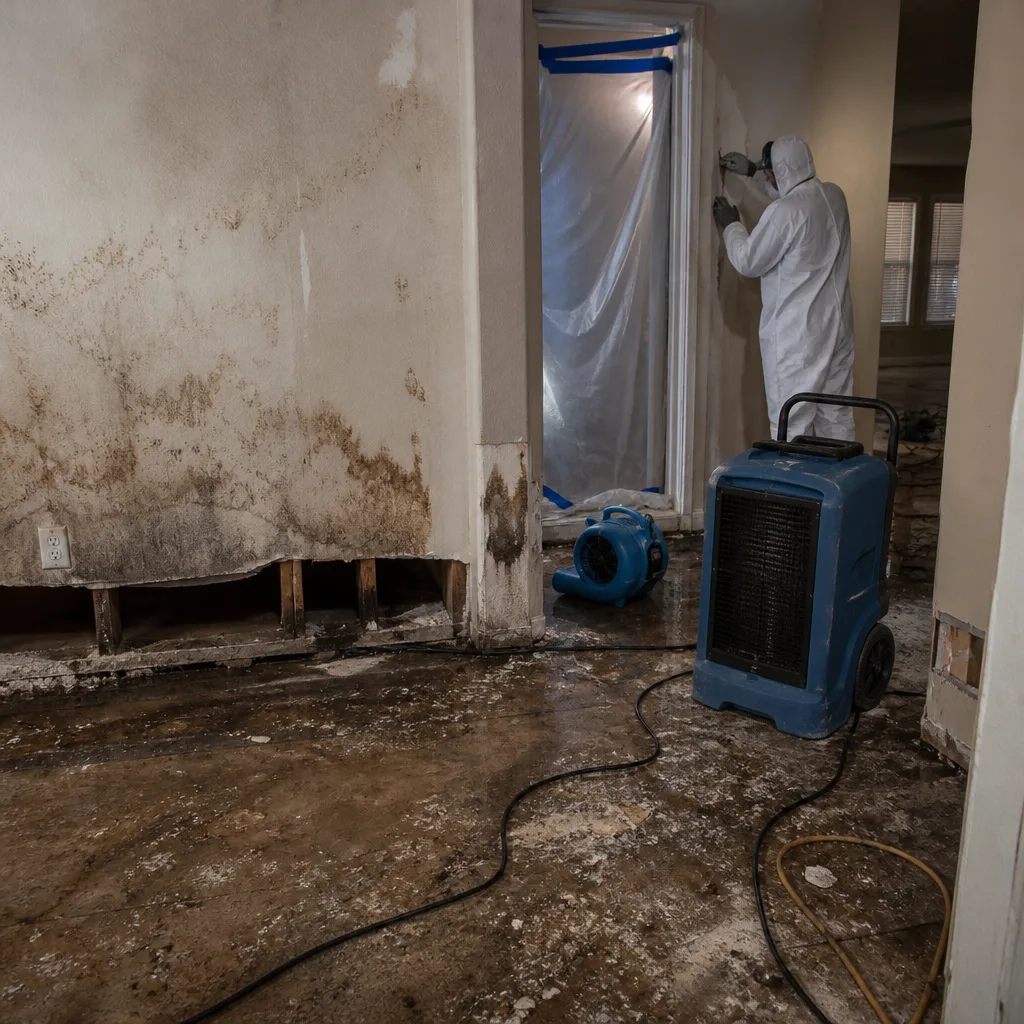 Before
 After
After Before
 After
After Before
 After
After