
Last updated October 16, 2026
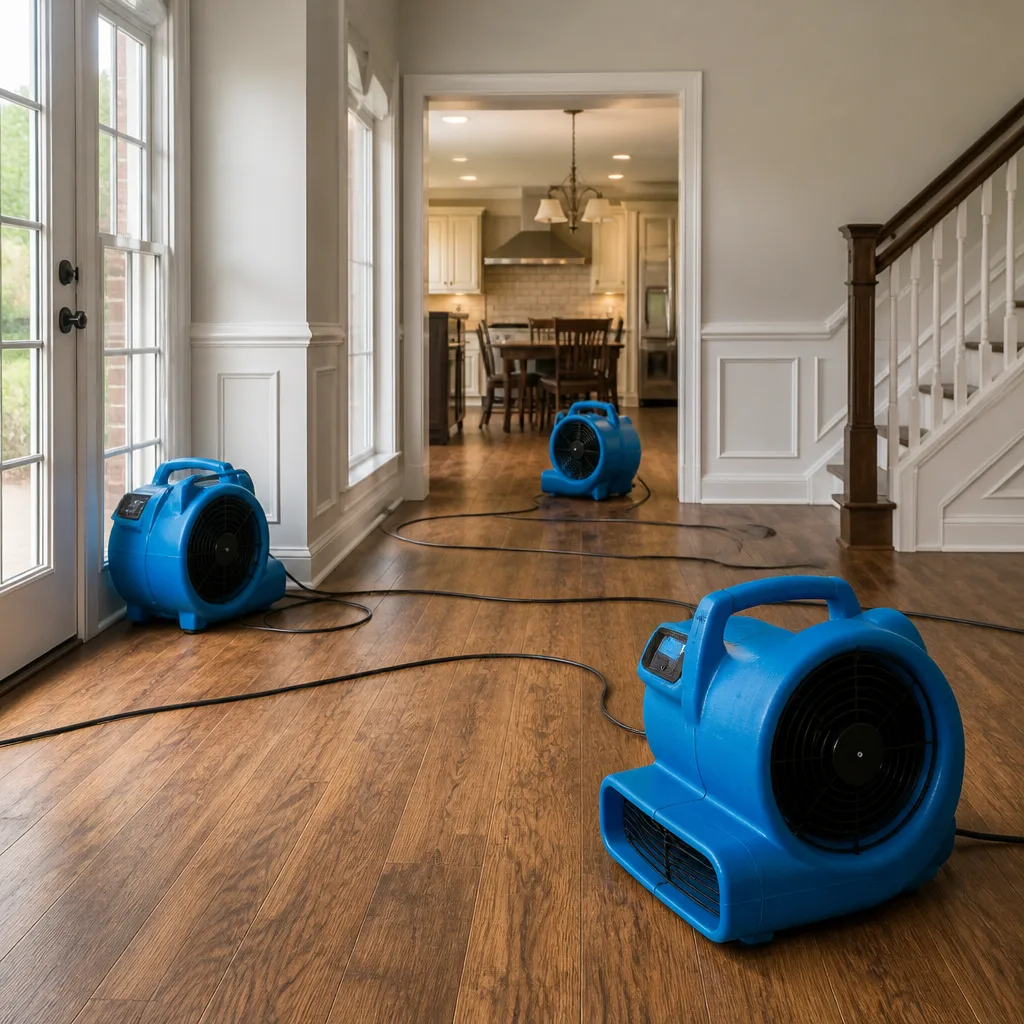 Water damage drying
 Fire & smoke cleanup
 Mold remediation
 Storm response
 Sewage cleanup
 Reconstruction
Free visual inspection and a written scope of work before any mitigation begins - photos, moisture readings, and drying logs go in your claim file
The scope we write is the scope we bill. Anything new gets shown to you, in writing, before we touch it.
Get your free estimateDIY vs Professional Damage Restoration: The Dallas Homeowner’s Decision Guide
A Dallas homeowner who mops up a washing machine overflow and runs box fans for three days has done what feels right. They’ve also, in many cases, given their insurer grounds to deny a mold remediation claim six months later because the loss wasn’t properly mitigated at the time of discovery. This guide explains exactly where the line sits between a DIY-safe water event and one that creates uninsured liability in Dallas, and how to protect both your home and your claim. For more guidance, see our How to Hire a Damage Restoration Contractor in Dallas: A Step-by-Step Guide.
Restoration work we handle
Quick Answer
DIY damage restoration in Dallas is appropriate only for small, clean-water spills caught within two hours on hard surface floors with no wall or subfloor penetration. Everything else, including any gray or black water, any subfloor involvement, or any HVAC duct contact, requires professional drying equipment and documentation to protect both the structure and your insurance claim. The threshold isn’t your skill level. It’s the moisture reading and the category of water.
Table of Contents
- The Real Cost Difference Between DIY and Professional Restoration
- The Moisture Threshold: Where DIY Stops Being Safe
- What “Proper Mitigation” Means Under a Texas Homeowner’s Policy
- Three Scenarios Where DIY Is Genuinely Appropriate in Dallas
- Three Scenarios Where DIY Is a Mistake
- The Cost of Professional Moisture Documentation in Dallas
- Temporary Protective Steps You Should Take Before Help Arrives
- Common Mistakes to Avoid
- When to Call a Professional
- Frequently Asked Questions
- The Bottom Line
The Real Cost Difference Between DIY and Professional Restoration
Homeowners in Dallas often assume professional restoration costs ten times what a DIY cleanup costs. The math is more complicated than that. A do-it-yourself approach to a washing machine overflow might cost $40 in box fan electricity and cleaning supplies. A professional water damage restoration in Dallas job for the same event might run $1,200 to $3,800 depending on square footage and drying time. That gap looks enormous on paper.
But the comparison only holds if the DIY job actually works. When it doesn’t, the homeowner is now facing a different set of numbers. Mold remediation in Dallas averages $1,500 to $6,000 for a contained area and can exceed $15,000 when wall cavities and subflooring are involved. A denied insurance claim because the initial mitigation wasn’t documented adds the full remediation cost back onto the homeowner. And a failed repair that requires professional correction costs more than if the professional had been called first, because now someone has to undo the DIY attempt before starting the real work.
We’ve walked into Dallas homes in Lake Highlands and Casa View where a homeowner spent three weekends drying out a “small” leak, only to have mold appear behind the baseboards a month later. The professional fix at that point costs two to three times what it would have cost on day one. The cheapest option isn’t always the least expensive.
One more factor Dallas homeowners don’t always account for: time. A professional crew with Dri-Eaz dehumidifiers and Phoenix air movers typically dries a contained water event in three to five days. Box fans and open windows in Dallas summer humidity can take three weeks, and the Dallas climate rarely cooperates. Relative humidity above 60% means evaporation slows dramatically. You’re not just spending your weekend. You’re giving mold a longer window to establish itself.
The Moisture Threshold: Where DIY Stops Being Safe
There is a specific, measurable line between a DIY-safe water event and one that requires professional equipment. It’s not a matter of opinion or experience. It’s a moisture reading.
Inexpensive pin-type moisture meters, the kind available at hardware stores in Dallas for $30 to $60, measure the moisture content of building materials. Wood framing in a Dallas home in a normal, dry state typically reads between 6% and 10% moisture content. A reading above 16% means the material has absorbed enough water to support mold growth. A reading above 20% means active water damage is occurring and professional drying is needed. Readings above 28% indicate saturated materials, which almost always require extraction equipment and structural drying.
The practical application is straightforward. If you mop up a spill, run fans for 24 hours, and your pin meter reads 12% or below across the affected area, you’re probably in the clear. If any area reads above 16% after 24 hours of DIY drying, the moisture has penetrated beyond what surface drying can address, and you need professional equipment. A single reading above 20% means water has traveled somewhere you cannot see: behind a baseboard, under flooring, into a wall cavity.
The second threshold is water category. Clean water from a supply line or an overflowing sink is Category 1. Water that has been used, such as washing machine discharge, dishwasher overflow, or shower water, is Category 2 and carries bacteria. Sewage, flood water, and any water that has sat for more than 48 hours is Category 3. A DIY approach is only defensible for Category 1 water caught within the first two hours. Once water category moves past 1, no amount of mopping and fan-running makes the area safe, regardless of what a moisture meter says.
The third threshold is the hardest for homeowners to assess without opening walls. Water travels down and sideways. A spill on a tile floor in a Dallas bathroom often penetrates the grout lines and reaches the subfloor, even when the surface looks dry. If any baseboard, drywall, or flooring edge shows visible swelling, discoloration, or a chalky white line after drying, water has entered the material. At that point you’re past DIY.
What “Proper Mitigation” Means Under a Texas Homeowner’s Policy
Texas homeowner’s insurance policies are generally HO-A, HO-B, or HO-C forms, and each has its own language around water damage. But nearly all of them share a common requirement: the homeowner has a duty to mitigate further damage after a loss. That means stopping the source of water, protecting the property from additional harm, and taking reasonable steps to dry the affected area.
Where DIY goes wrong for insurance purposes is the word “reasonable.” An insurance adjuster reviewing a mold claim six months after a water event will ask what was done at the time of discovery. If the answer is “I mopped it up and ran fans,” the adjuster may determine that the homeowner failed to properly mitigate the loss, which can give the insurer grounds to deny the subsequent mold claim. This isn’t a rare outcome. We’ve seen it happen repeatedly across Dallas, in neighborhoods from Preston Hollow to Pleasant Grove.
The good news is that DIY mitigation can preserve coverage if it’s documented correctly. What matters to the insurer is that a reasonable person took reasonable steps. The steps that count are: photographing the affected area before and after cleanup, logging the date and time the water was discovered, recording humidity readings if you have a hygrometer, keeping receipts for any equipment or materials used, and noting the drying time and the moisture meter readings taken throughout. Homeowners who do this and still end up with mold typically have a much stronger claim than those who don’t.
The complication is that “reasonable” in Dallas means something specific because of our climate, as detailed in our Seasonal Damage Restoration Care for Dallas: Year-Round Homeowner’s Guide. Running fans without dehumidification in Dallas summer, when outdoor relative humidity sits at 60% to 80%, moves moist air around rather than drying anything. An adjuster who knows Dallas weather will question whether fans alone were a reasonable mitigation effort. Professional drying equipment, like the Dri-Eaz and Phoenix dehumidifiers we run, actively removes moisture from the air rather than just circulating it.
If you want to protect a future claim while doing the cleanup yourself, document everything. If you want to eliminate the question entirely, hire a professional who provides a written moisture map and drying log. That documentation is what an adjuster looks for.
Three Scenarios Where DIY Is Genuinely Appropriate in Dallas
We’re not going to tell you that every water event requires a professional crew. That’s not true, and homeowners who know where the line sits can save real money. These are the three situations where we’d say go ahead and handle it yourself.
- A small Category 1 spill caught within two hours on hard surface flooring. A pitcher of water knocked over, an ice maker line that drips onto tile and is caught immediately, a sink overflow that is mopped within minutes. If the water never touched drywall, never reached baseboards, and the floor is tile, sealed concrete, or vinyl with tight seams, a thorough mop-up followed by fans and a moisture check is reasonable.
- An appliance leak contained to a visible surface. A dishwasher that leaks onto a tile kitchen floor while you’re home, a water heater pan that catches a slow drip, a washing machine hose that sprays onto linoleum and you shut the water off within minutes. The key variable is whether the water had time to travel. If you can see the full extent of the wet area and it’s all hard surface, DIY is defensible.
- A roof leak that drips into a bucket in the garage. This sounds trivial, but it’s the scenario where DIY is most often appropriate. If the leak is contained to a concrete garage floor and the drywall ceiling has a small, visible wet spot that dries completely once the weather passes, you can document it, monitor it with a moisture meter over a week, and move on. The caveat is that any soft spot, sagging, or persistent moisture reading above 16% means the water found a cavity, and that’s a professional call.
In all three scenarios, the same rules apply: stop the source, remove standing water, run fans and a dehumidifier if you have one, document everything with photos and moisture readings, and check again in 48 hours. If the readings haven’t dropped below 16%, call someone who does Dryden Restoration Dallas home service work before it gets worse.
Three Scenarios Where DIY Is a Mistake
These are the situations where we’ve seen Dallas homeowners lose money, time, and insurance coverage by trying to go it alone.
- Any Category 2 or Category 3 water. Washing machine discharge, dishwasher overflow, toilet overflow from the bowl, shower water that flooded a bathroom, sewage, or storm water. These carry bacteria and contaminants that require antimicrobial treatment, not just drying. Mopping up sewage exposes you to pathogens. Calling it “clean enough” exposes your family to what’s left behind. Category 2 and 3 water also requires disposal of porous materials like carpet pad, and insurance policies treat this differently than clean-water events. This is a professional job, period.
- Any subfloor involvement. Water that penetrates flooring and reaches the subfloor cannot be adequately dried from above. Tile floors with water in the grout lines, hardwood that’s cupping, carpet that squelches, vinyl that’s bubbling: all of these mean the water is underneath. Drying a subfloor requires lifting the flooring or using specialized drying mats like the Injectidry systems we run, which push air through the flooring assembly. Without that equipment, the subfloor stays wet for weeks, and mold follows.
- Any HVAC duct contact. Water that reaches ductwork is a problem most homeowners never consider. If water from an overflow in a hallway reaches a floor register, or a supply line leak in an attic drips onto flex duct, the inside of the ductwork is now wet. Ducts are dark, warm, and full of dust, which makes them ideal mold environments. Drying ductwork properly requires professional equipment that pushes dry air through the entire duct run. A fan pointed at a floor register does nothing for the inside of the duct 20 feet away.
In each of these scenarios, the DIY attempt doesn’t just fail to fix the problem. It delays the professional response, makes the eventual repair more expensive, and gives mold a head start that’s hard to undo. If you’re in one of these situations, the best thing you can do is the temporary steps in the section below, then call someone who does this work in Dallas every day.
The Cost of Professional Moisture Documentation in Dallas
A written moisture map report, the document that shows exactly where moisture readings were taken, what they measured, and how they changed over the drying period, typically runs $150 to $350 in Dallas as a standalone service. Most restoration companies include this documentation as part of a full restoration job, but homeowners who want just the documentation, without the drying, can often arrange it.
The question is why you’d pay for a moisture map if you’re drying the area yourself. The answer is insurance. If you do your own drying and mold appears six months later, your insurer will ask for proof that you mitigated the loss properly. A moisture map from a professional, with dated readings from a calibrated meter, is hard for an adjuster to dismiss. Your handwritten notes and a $40 hardware store meter are easier to challenge.
In our experience in Dallas, a $200 moisture map has saved homeowners thousands in denied claims. It’s the cheapest insurance policy you can buy on a water loss. The documentation shows the initial extent of the moisture, the drying plan, and the final readings confirming the structure was dry. If mold appears later anyway, the homeowner can show that a professional assessed the situation and the readings were normal, which shifts the conversation from blame to coverage.
Not every water event needs this level of documentation. A pitcher of water spilled on tile and mopped up in three minutes doesn’t need a moisture map. But if you’re on the fence, if your pin meter shows anything above 16%, or if water touched any building material, the $150 to $350 is cheap compared to what a denied mold remediation claim costs in Dallas.
We run Dri-Eaz and Phoenix dehumidifiers along with calibrated moisture meters on every mold remediation in Dallas job and every water event we touch, and the documentation is part of the written record we provide. If a homeowner wants just the map and not the drying, we can do that too.
Temporary Protective Steps You Should Take Before Help Arrives
There’s a difference between temporary protective steps and restoration work. Temporary steps protect your property and your claim. Restoration work can void your claim if done incorrectly. Here’s the order of operations we give Dallas homeowners who call us with water in the house.
- Stop the source. Shut off the water at the fixture, the appliance, or the main valve. If it’s a roof leak, place a bucket and move anything underneath it. If it’s an electrical hazard, shut off the breaker to the affected area before touching anything.
- Photograph everything before you move anything. Take wide shots of the room, close-ups of the water, shots of the baseboards, the flooring, the contents. These photos are your record of the initial condition, and they matter if a claim is filed. Do this before mopping.
- Move contents to dry ground. Furniture, rugs, boxes, anything that can be lifted. Place aluminum foil or plastic under furniture legs that can’t be moved. Get electronics up off the floor.
- Extract standing water with a wet/dry vacuum if you have one. This is still protective, not restorative. Removing standing water reduces the amount that can soak into building materials. Don’t use a regular household vacuum. Wet/dry only.
- Run fans and a dehumidifier if you have one. Point fans at the wet area. Keep windows closed if the outdoor humidity is high, which in Dallas is most of the year. If you don’t have a dehumidifier, running fans is better than nothing but not a substitute.
- Log everything. The time you discovered the water, the time you stopped the source, the photos you took, the steps you took, the moisture readings if you have a meter. Write it all down. This log is part of your mitigation record.
The line you shouldn’t cross: cutting into drywall, pulling up flooring, removing baseboards, or “investigating” by opening walls. That’s restoration territory. Once you start opening the structure, you’ve changed the conditions and potentially affected your claim. In Dallas, where many homes sit on slab foundations with drywall that wicks water quickly, the temptation to cut open a wall to “see how bad it is” is strong. Don’t. Document, dry what you can see, and call a professional for anything you suspect is hidden.
Common Mistakes to Avoid
- Running fans without a dehumidifier in Dallas humidity. This is the mistake we see more than any other. Dallas summer relative humidity averages 60% to 80%. Fans alone move humid air across wet surfaces, which slows evaporation and can push moisture deeper into materials. A dehumidifier is not optional for drying in this climate.
- Using a household vacuum on standing water. This is a shock hazard and it ruins the vacuum. Wet/dry vacuums only. This mistake has put more than one Dallas homeowner in the emergency room.
- Assuming the surface drying means the structure is dry. Tile feels dry to the touch while the subfloor underneath is saturated. Drywall looks dry while the wall cavity holds 28% moisture. The only way to know is with a moisture meter, and the readings need to be taken at the material, not the surface.
- Throwing away the receipts. If you buy a dehumidifier, rent a wet/dry vac, or buy cleaning supplies specifically for the water event, keep the receipts. They’re part of your mitigation documentation and may be recoverable under your policy.
- Waiting to check hidden spaces. The area behind the baseboard, under the flooring, inside the wall cavity. Water travels to these spaces within minutes. If you wait a week to check, you’ve given mold a full week to grow. Check with a pin meter within 48 hours.
- Removing baseboards or cutting drywall to “see how bad it is.” This changes the condition of the property and can complicate a claim. Document what you can see, dry what you can reach, and leave structural investigation to someone who does it professionally in Dallas.
- Treating gray water like clean water. Washing machine water, dishwasher water, shower overflow. These have bacteria. Mopping them up without disinfecting leaves contaminants behind, and touching them without gloves is a health risk. Category 2 water needs antimicrobial treatment, not just drying.
When to Call a Professional
Call a professional when any of these apply: the water is Category 2 or 3; the water touched drywall, baseboards, or flooring with seams; your moisture meter reads above 16% after 24 hours of DIY drying; the water event happened while you were away and you don’t know how long it sat; the water reached any HVAC duct; you see mold or smell a musty odor; or you have any doubt about the extent of the damage. See our Water Damage Restoration Maintenance Checklist for Dallas Homeowners for a full readiness plan. In these situations, the professional equipment and written documentation are not optional. They’re the difference between a covered claim and a denied one.
Dryden Restoration Dallas offers free estimates in Dallas. Call (940) 468-1166 and a live person answers. We’ll tell you over the phone whether your situation sounds DIY-safe or whether you need a professional look, and we’ll give you a written price before any work starts if you do.
Frequently Asked Questions
Professional water damage restoration in Dallas typically runs $1,200 to $3,800 for a contained Category 1 water event affecting one room, including extraction, drying equipment, and monitoring. Larger events involving multiple rooms or Category 2 or 3 water run $4,000 to $12,000 or more. Mold remediation as a downstream cost adds $1,500 to $6,000 for a contained area. These ranges reflect Dallas market pricing as of 2025. Call (940) 468-1166 for an exact quote on your situation. Estimates are free.
Your insurance coverage depends on whether the mitigation steps you took were reasonable and documented. In Texas, a homeowner has a duty to mitigate further damage, and documented DIY efforts, including photos, logs, and moisture readings, generally preserve coverage. Undocumented cleanup, or cleanup that failed to actually dry the structure, can give an adjuster grounds to deny a later mold claim. If you’ve started DIY cleanup, document everything you’ve done and the readings you’ve taken before calling your insurer.
Dryden Restoration Dallas has live phone support 24 hours a day, 7 days a week, and we give a named arrival window when you call. Water mitigation jobs are dispatched quickly because water damage compounds by the hour. Call (940) 468-1166 and someone will tell you exactly when a technician can be at your door.
If the water was Category 1, was caught within two hours, and your moisture meter reads below 16% across the entire affected area after 24 hours of drying, a thorough cleaning is probably sufficient. If any of those conditions isn’t met, you need professional drying, because the moisture is in places you can’t clean. The test is the moisture reading, not how the surface looks. In Dallas, we’ve seen surfaces that looked clean and dry while the wall cavity behind them held 25% moisture.
That’s your call. Some Dallas homeowners prefer to handle the adjuster relationship themselves and use our written documentation, including the moisture map and drying log, as their evidence. Others ask us to speak with the adjuster directly, and we do that regularly. Either way, the documentation is the foundation of the claim, and it’s included with every job we do. We also provide photo documentation throughout the process, which is what adjusters respond to.
The Dallas-specific mistake is running fans without a dehumidifier during our humid months, which is most of them. Dallas relative humidity stays above 55% for large parts of the year, and fans alone in that environment don’t dry building materials. They circulate moist air. A homeowner in Phoenix can dry a water event with fans. A homeowner in Dallas cannot. This single misunderstanding leads to more failed DIY restorations in Dallas than any other factor.
The Bottom Line
The DIY versus professional damage restoration decision in Dallas isn’t about whether you can mop a floor. It’s about whether you can dry the materials the water touched, document the process well enough to protect a future insurance claim, and verify with a moisture meter that the structure is actually dry. For small, clean-water spills caught immediately on hard surfaces, you can. For anything else, the professional route costs less in the long run, protects your claim, and prevents the mold problem that turns a $200 cleanup into a $6,000 remediation. If you’re unsure where your situation falls, call (940) 468-1166. We’ll tell you honestly whether you need us or not. For more guides & resources, visit our blog.
Written by Carl Brandt, Owner at Dryden Restoration Dallas, serving Dallas since 2005.
See the difference
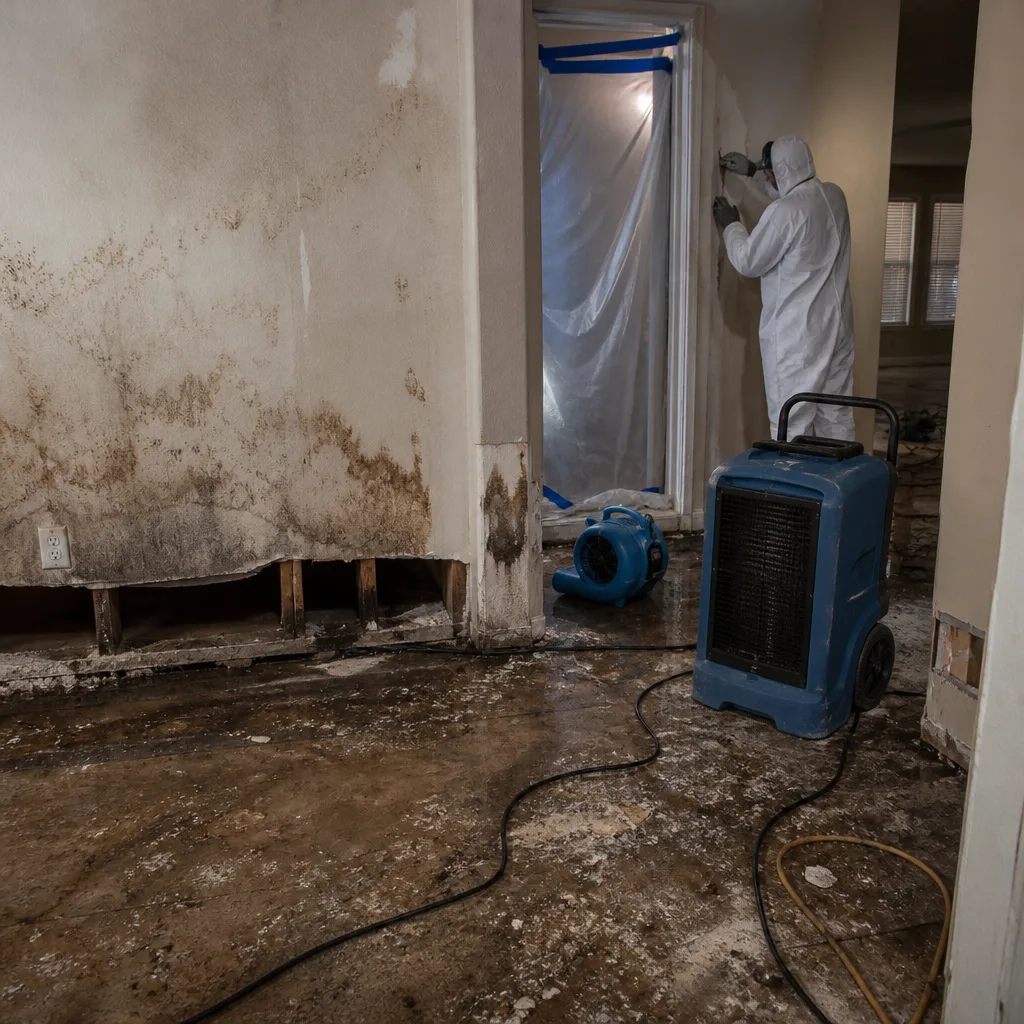 Before
 After
After Before
 After
After Before
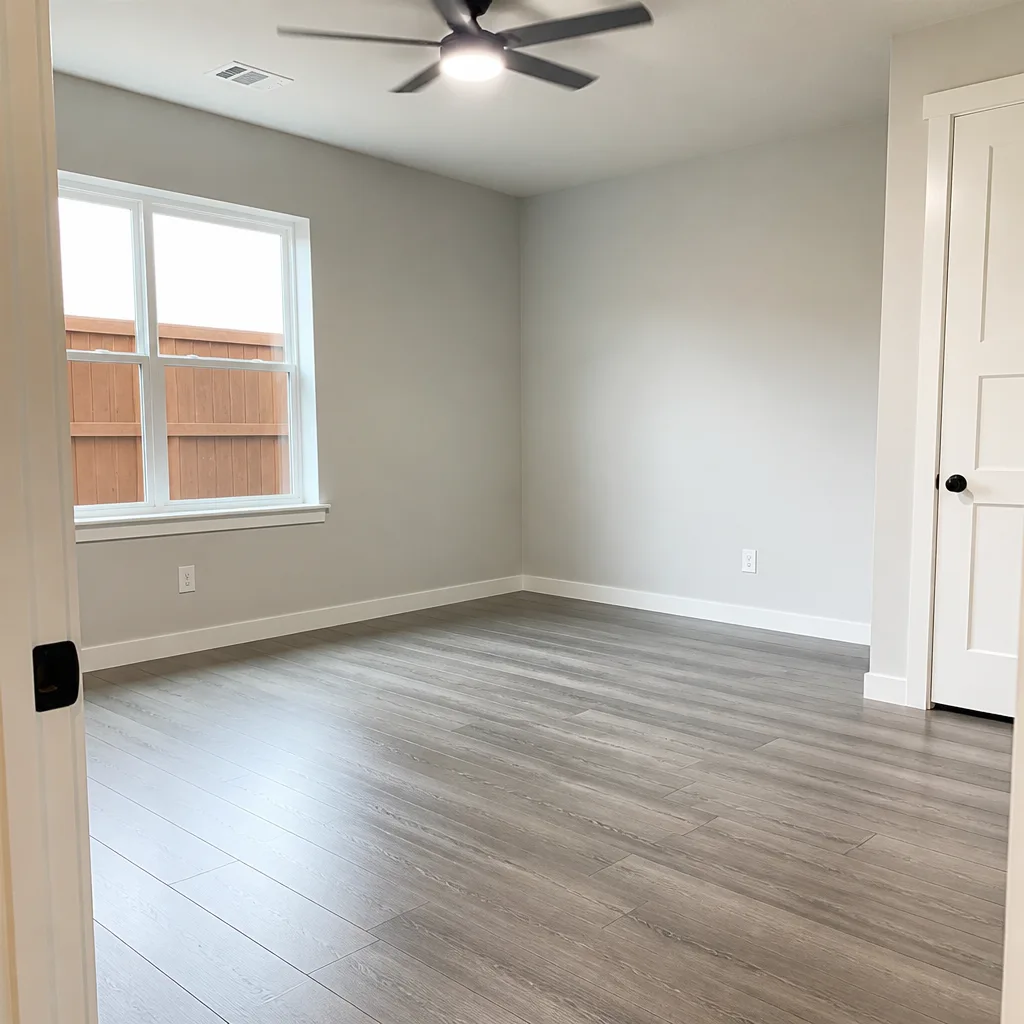 After
After