
Last updated October 16, 2026
 Water damage drying
 Fire & smoke cleanup
 Mold remediation
 Storm response
 Sewage cleanup
 Reconstruction
Free visual inspection and a written scope of work before any mitigation begins - photos, moisture readings, and drying logs go in your claim file
The scope we write is the scope we bill. Anything new gets shown to you, in writing, before we touch it.
Get your free estimateWater Damage Restoration Maintenance Checklist for Dallas Homeowners
A Dallas homeowner’s water bill creeping up $18 a month is one of the quietest signs of a slab leak. That slow loss can saturate a subfloor for a full year before the flooring buckles and the restoration bill hits $15,000. The frustrating part is that most of this damage is preventable with a maintenance routine built for how Dallas homes actually fail. This guide gives you that routine: month-by-month tasks, specific checks for the five spots everyone misses, and the meter-reading trick that catches a slab leak before it becomes a restoration project. We’ve spent two decades in Dallas homes, and we can tell you the maintenance list that works here is not the same as the one written for Minneapolis or Phoenix.
Restoration work we handle
Quick Answer
A Dallas-specific water damage prevention routine means checking your water meter monthly for hidden leaks, keeping indoor humidity between 45 and 55% RH year-round, cleaning gutters before May storms, inspecting supply lines after February freezes, and reading your attic humidity every August. The five most overlooked leak points are refrigerator ice-maker lines, water heater pans, AC condensate pans, toilet supply valves, and dishwasher door seals. One $75 to $150 annual camera inspection of older supply lines catches what visual checks miss.
Table of Contents
- The Dallas Climate Calendar: What Fails Here and When
- How to Read Your Water Meter to Catch a Slab Leak
- The Five Interior Spots Dallas Homeowners Overlook
- Humidity in a Dallas Home: What 45 – 55% RH Actually Means
- The Month-by-Month Dallas Maintenance Checklist
- The One Annual Professional Inspection Worth Paying For
- What Professional-Grade Drying Actually Looks Like
- Common Mistakes to Avoid
- When to Call a Professional
- Frequently Asked Questions
- The Bottom Line
The Dallas Climate Calendar: What Fails Here and When
Dallas has a specific failure calendar. It is not the same as Houston’s, and it is certainly not the same as any northern city’s. Our weather swings from hard freezes in February to 100-plus-degree heat in August, with violent spring storm fronts in between. Each season stresses different parts of a home’s water system.
Between January and March, we see freeze-thaw damage on exterior hose bibs, irrigation backflow preventers, and any supply line running through an uninsulated attic or exterior wall. The February 2021 freeze taught every Dallas homeowner what a burst attic pipe looks like. What many still do not realize is that a pipe can freeze, crack, and then leak only after the thaw when water pressure returns. That means a leak from a February freeze might not show itself until March or April.
April through June is storm season. The failure points shift to gutters, downspouts, French drains, and any place where water pools against a slab foundation. A gutter that overflows during a two-inch Dallas downpour is not just an annoyance. It is depositing hundreds of gallons of water against the foundation perimeter every single storm. That water finds its way into the clay soil, which expands when wet and shrinks when dry. The movement puts pressure on supply lines running through the slab. This is why a water damage restoration in Dallas call so often starts with a homeowner who just noticed a warm spot on the floor three weeks after a storm.
July through September brings the opposite problem: sustained heat and, in August, monsoon-level humidity spikes. The attic becomes an oven, and any condensation on AC ductwork or uninsulated pipes becomes a slow drip into the ceiling below. We have opened ceilings in August that had been quietly collecting condensation for two months, feeding mold behind the drywall. Humidity management in the hottest months matters as much as leak prevention in the storm months.
October through December is the cleanup window. The ground is dry, the attic is cooler, and it is the best time to do annual inspections. A professional who looks at your supply lines, water heater, and AC condensate system in October will find problems long before the February freeze or the May storms make them emergencies.
How to Read Your Water Meter to Catch a Slab Leak
You do not need a plumber or any special tool to detect most slab leaks early. You need a water meter, a sharpie, and ten minutes. The process works because your water meter only moves when water is actually flowing through it. If everything in the house is off, and the meter is still moving, water is leaving the system somewhere it should not.
Here is the step-by-step process we walk Dallas homeowners through on the phone:
- Find your water meter. In Dallas, most residential meters are in a rectangular concrete or plastic box near the curb or sidewalk, often in line with an exterior hose bib. Open the lid carefully. Watch for spiders and dirt.
- Turn off everything that uses water. Every faucet, every toilet, the washing machine, the dishwasher, the ice maker, the irrigation system. Do not run anything during the test.
- Look at the meter dial. Most Dallas meters have a small triangular or gear-shaped leak indicator that spins even at very low flow. If that indicator is moving at all while everything is off, you have a leak somewhere.
- If no indicator, write down the full reading. Include every digit, including the last dial. Wait 30 minutes. Do not use any water. Read the meter again. If the number changed, you have a leak.
- Isolate the source. Shut off the water supply valve to each toilet, one at a time, and repeat the test. Toilet flapper leaks are the most common culprit. If the meter still moves with all toilets isolated, shut off the main supply to the house. If the meter still moves with the house supply off, the leak is between the meter and the house. That is when you call a plumber.
One thing to know: a slow slab leak under a foundation does not always show on the meter as a dramatic spin. It may be a barely visible crawl of the leak indicator. If that indicator is moving, even slowly, with everything off, treat it as a real leak. The $18-a-month water bill creep comes from exactly this kind of slow loss. Over a year, that is a saturated subfloor, swollen cabinetry, and a floor that buckles out of nowhere. We have walked into Dallas homes where the homeowner told us, “The water bill was a little high for a while, but I figured the kids just took long showers.” Then the engineered wood floor started lifting in the hallway. The Dryden Restoration Dallas home team has seen this exact sequence more times than we can count.
The Five Interior Spots Dallas Homeowners Overlook
Every national maintenance list tells you to check under sinks. Fine. But the leaks that actually turn into Dallas restoration projects are rarely under a sink. They are in the spots nobody thinks to look until the damage is already done. Here are the five we consistently find during inspections:
1. Refrigerator ice-maker lines
This is the number one overlooked leak source in Dallas kitchens. The small plastic or braided line that feeds the ice maker runs behind a 400-pound appliance that never moves. The line is under constant pressure, and in Dallas’s hard water, mineral deposits gradually stress the fittings. A pinhole leak behind a refrigerator can drip for months, soaking the subfloor and base cabinets, before anyone notices. The warm refrigerator compressor dries the visible surface, so there is no puddle to see. Pull the refrigerator out twice a year and check the entire line. If the line is plastic and more than five years old, replace it with a braided stainless steel line. It is a $20 fix that prevents a $5,000 floor restoration.
2. Water heater pans
Every water heater sits in a drain pan, but the pan only works if the drain line is clear and the pan is not rusted through. In Dallas garages and closets, pans fill with dust, dead insects, and mineral scale. The drain line clogs. Then the water heater develops a slow tank leak, and the pan overflows onto the floor. We have seen water heater closets in North Dallas where the subfloor was completely rotted because the pan overflowed for weeks. Check the pan monthly. Pour a cup of water into it and confirm it drains. Look for rust spots. If the pan is rusted, replace it before the tank fails.
3. AC condensate drain pans
Dallas air conditioners run hard from May through October. Every hour they run, they pull gallons of humidity out of the air. That water drains through a condensate line to the outside or into a plumbing drain. When the line clogs with algae and dust, water backs up into the overflow pan under the air handler. If that pan is cracked or its drain is clogged, water spills into the ceiling or the closet floor. This is one of the most common causes of water damage in Dallas homes we are called to assess. In August, when humidity is at its peak, the system produces the most condensate. Check your condensate line every month during cooling season. Pour a cup of white vinegar down the line to keep algae from building up. If the overflow pan is wet, the primary line is clogged.
4. Toilet supply valves
The shut-off valve behind every toilet is a small metal or plastic fitting that rarely gets touched. It sits in a damp, dark space, and in Dallas’s hard water, corrosion builds up. The packing nut dries out. The valve begins to weep. Because toilets are used multiple times a day, the area is often wiped down, and the small puddle gets absorbed by the bath mat or the baseboard. Turn each toilet supply valve off and back on twice a year. If it feels gritty, drips, or will not fully close, replace it. A $12 valve prevents a $2,000 bathroom floor restoration.
5. Dishwasher door seals
The rubber gasket around a dishwasher door loses its flexibility after about five years of hot Dallas water and detergent. When it fails, water seeps out during every cycle. The leak is small, often a few tablespoons per load, but it runs along the toe kick and into the subfloor. Because dishwashers are usually installed flush with cabinetry, the water wicks into the particleboard base cabinets on both sides. By the time the floor shows damage, the cabinets are often swelling too. Run a dry paper towel along the bottom edge of the dishwasher door after a cycle. If it comes back damp, the seal is failing. A replacement seal costs $30 to $50 and takes 20 minutes to install.
Humidity in a Dallas Home: What 45 – 55% RH Actually Means
Relative humidity, or RH, is the amount of moisture in the air compared to what the air could hold at that temperature. It is not an abstract number. In a Dallas home, the difference between 45% RH and 65% RH is the difference between a healthy indoor environment and a mold incubator. Mold does not need standing water. It needs sustained humidity above roughly 60% RH on a surface, and in a Dallas summer, a poorly ventilated bathroom or closet can hit that in a day.
The healthy target for a Dallas home is 45 to 55% RH. Below 45%, you will notice static electricity, cracked wood, and dry sinuses. Above 60%, you are inviting condensation on cool surfaces, dust mites, and mold growth on drywall and fabrics. The sweet spot is not just a comfort preference; it is a maintenance parameter. We tell every Dallas homeowner, particularly those with pier-and-beam or slab foundations, that keeping RH under 60% in the summer is the single most effective thing they can do to prevent hidden mold in walls and ceilings.
Two inexpensive ways to monitor it:
- A digital hygrometer. You can buy one for $10 to $25 at any hardware store or online. Place it in the room you are most concerned about, like a bathroom, a closet on an exterior wall, or the room above the garage. Check it at different times of day. Humidity spikes after showers, after cooking, and overnight when the AC runs less.
- Your AC thermostat’s built-in humidity display. Many Dallas homes have thermostats that already show indoor RH. If yours does, check it during the hottest part of the day. If it reads above 60% with the AC running normally, your AC may be oversized or the condensate system may be clogged.
If you find sustained readings above 60%, the fix starts with the simple stuff: run exhaust fans during and after showers, vent the dryer outside, and make sure the AC condensate line drains. If the problem continues, a dehumidifier in the affected area, or a whole-home dehumidifier added to the HVAC system, is the next step. For anyone dealing with mold that has already formed, that is a job for mold remediation in Dallas, not a maintenance fix. The distinction matters: preventing mold is a homeowner job; removing established mold is a professional one.
The Month-by-Month Dallas Maintenance Checklist
This is the working checklist we give to Dallas homeowners who ask what they should be doing every month. It is built around the Dallas failure calendar, not a generic national list. You can do most of this yourself in under an hour a month.
January
- Check exterior hose bibs for drips and cracks. A split hose bib often leaks behind the brick, not in front of it.
- Inspect any exposed pipe in the attic or garage. Look for frost, condensation, or small white mineral deposits that signal a pinhole leak.
- If you have a water softener, check the brine tank for salt bridges and the drain line for kinks.
February
- After every hard freeze, check the water meter using the method above. A freeze can crack a pipe that only leaks after thaw.
- Open cabinet doors under sinks on exterior walls during freezing nights to let warm air reach the pipes.
- Inspect irrigation backflow preventers. A cracked backflow can leak hundreds of gallons into the yard before you notice.
March
- Test the water heater pressure relief valve. Lift the lever briefly and confirm water flows out the discharge pipe. A stuck valve is a sign of sediment buildup.
- Check the water heater pan for rust and clear the drain line.
- Start the seasonal gutter check. Remove winter debris and confirm downspouts extend at least four feet from the foundation.
April
- This is the month to prepare for Dallas storm season. Clean gutters thoroughly and check for sagging or pulled-away sections.
- Walk the entire foundation perimeter after a rain. Look for any place water pools against the slab. Patch low spots with compacted soil so water flows away.
- Check the French drains and any surface drains for blockages. Flush them with a garden hose.
May
- Before the storm season peaks, run the full water meter test again. Spring soil movement can stress slab supply lines.
- Inspect all exterior caulk and weatherstripping around windows and doors. Water driven by a Dallas wind can enter through a failed seal that a gentle rain would never find.
- Turn off and drain any outdoor fixtures that will not be used until fall.
June
- Start the monthly AC condensate line maintenance. Pour a cup of white vinegar down the primary line and check the overflow pan.
- Check the refrigerator ice-maker line for the first time this year. Pull the fridge out and look at the entire line.
- Run the dishwasher door seal test with a dry paper towel.
July
- Check indoor RH levels with the hygrometer. Dallas July heat pushes AC systems to their limit, and any condensate issue will show up now.
- Inspect toilet supply valves by turning them off and back on.
- Look at the ceiling under any bathroom on the second floor. Small dark spots, peeling paint, or a slight yellow tint can signal a slow leak from above.
August
- This is the most important humidity month in Dallas. Read the attic humidity. On a 100-degree day, a healthy, ventilated attic should read below 65% RH and the temperature should not exceed 130°F. Anything higher means you need better ventilation or the AC ducts are sweating.
- Check every bath exhaust fan. Hold a tissue up to the grille. If it does not hold the tissue in place, the fan is not moving enough air and the bathroom is trapping humidity.
- Run the second water meter test of the summer. The ground is at its driest and any slab leak will show movement on the dial more clearly.
September
- After a Dallas summer, check the water heater anode rod if the unit is more than five years old. A depleted rod means the tank is rusting from the inside.
- Clean the AC condensate pan and confirm the emergency overflow switch is not tripped.
- Check under every sink for mineral streaks, rust, or soft spots on the cabinet floor.
October
- This is the month to schedule the annual professional inspection described below. The weather is mild, and the inspector can access everything while conditions are dry.
- Flush the water heater. Dallas water is hard, and sediment buildup shortens tank life and creates pinhole leaks.
- Clean gutters before the leaves really start falling. You will need to do it again in December.
November
- Drain and winterize exterior hose bibs and any exterior sink.
- Insulate exposed pipes in the attic and garage. Foam pipe insulation is $2 for a four-foot section.
- Check the caulking around tubs, showers, and the base of toilets. Gaps let water reach the subfloor during every shower.
December
- Final gutter cleaning of the year. A clean gutter in December means a working gutter in February.
- Run the full water meter test for the fourth time this year.
- Walk the entire interior of the home and look at baseboards, ceiling corners, and closet floors for any sign of water staining.
The One Annual Professional Inspection Worth Paying For
Most maintenance you can and should do yourself. There is one exception: a camera inspection of your supply lines. This is a $75 to $150 service from a licensed Dallas plumber, and it catches what no visual check can. A plumber runs a small camera through the main supply line and the accessible branch lines to look for corrosion, pinholes, joint separation, and the early signs of a slab leak. For homes built before 2000, or any home that has already had one slab leak, this inspection is the cheapest insurance you can buy against a $15,000 floor restoration.
What the plumber should do during this inspection:
- Camera the main supply line from the meter to the house connection.
- Camera the accessible hot and cold branch lines, particularly any running through the slab.
- Inspect the water heater for tank condition, anode rod status, and pressure relief valve operation.
- Check the AC condensate system, both the primary and overflow lines.
- Look at every shut-off valve in the home and note any that need replacement.
- Provide a written report with photos, including the location of any concerns.
We recommend this inspection every October. If the plumber finds something, you have the winter to address it before the February freeze and the spring storm season. If the plumber finds nothing, you have a documented baseline for next year. The written report is the point. A homeowner who can show a plumber’s report from the previous year proving a valve was fine then has a much clearer conversation about what changed. If the inspection does reveal a slab leak or another active problem, that is a different kind of project. For that, you want a restoration company, not just a plumber, because the damage from a slab leak usually includes wet subfloor, swollen cabinetry, and the start of mold. A water damage restoration in Dallas crew works alongside the plumber to dry the structure properly while the plumber fixes the line.
What Professional-Grade Drying Actually Looks Like
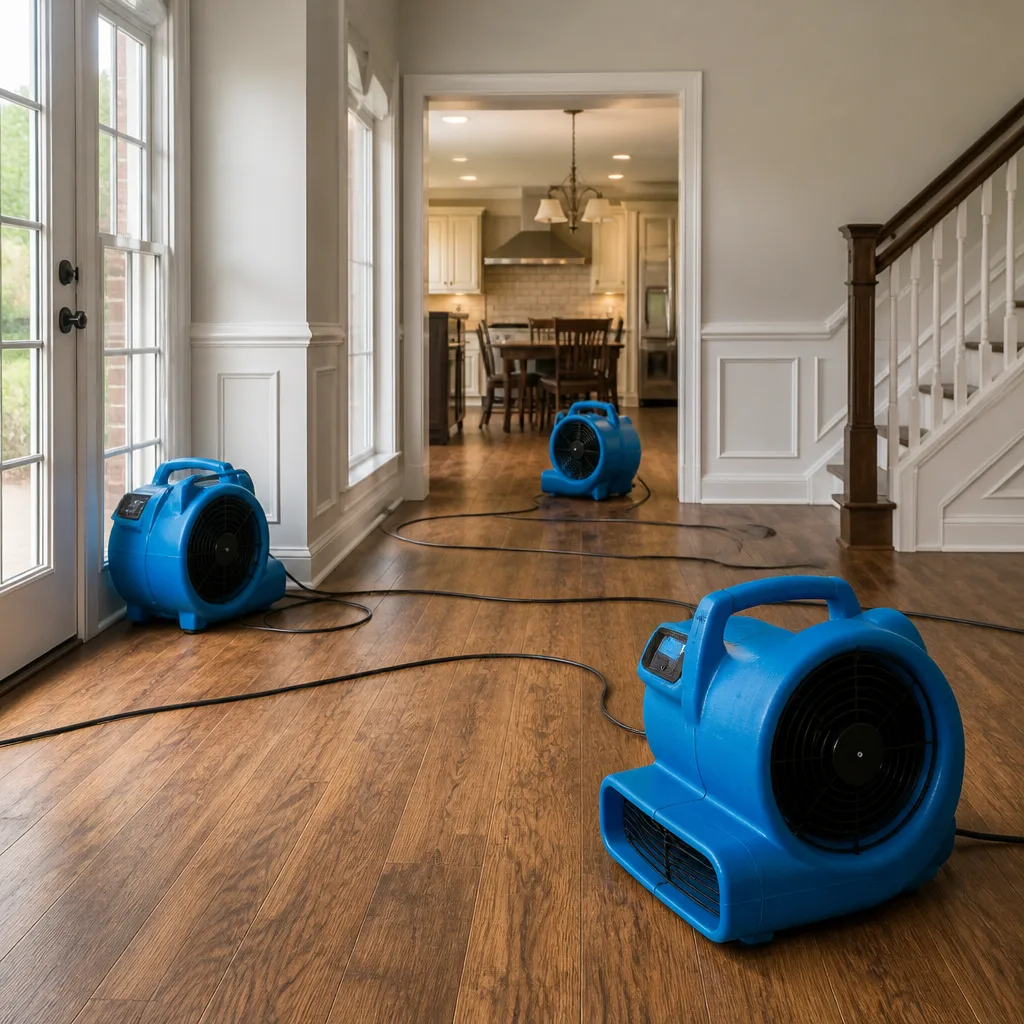
When prevention fails and a leak does turn into a restoration project, the equipment and standards matter. A homeowner deserves to understand what professional-grade drying means, because the difference between a floor that dries completely and a floor that looks dry but is not shows up six months later as mold or buckling.
The process we use is called psychrometric drying. That is a formal way of saying we measure temperature and RH in the affected area, calculate how much water is in the air and in the materials, and then use that data to decide exactly which machines to place and where. We do not guess. A proper drying project includes daily measurements until the moisture content in the wood, drywall, and concrete returns to a normal baseline for Dallas conditions.
The equipment brands we run are the same ones large commercial restoration crews use: Dri-Eaz and Phoenix dehumidifiers, XPOWER and B-Air air movers, and Injectidry systems for hard-to-reach cavities like wall interiors and under cabinetry. We work to IICRC standards, which is the restoration industry’s recognized benchmark for water damage training and ethics. When we explain the drying plan to a homeowner, we say it in plain English: here is where the water went, here is what we are doing to pull it out, here is how long it should take, and here is what the readings will look like when it is done.
One note for any Dallas homeowner comparing restoration companies: ask whether they use a written drying plan with daily moisture readings. If the answer is vague, keep looking. A company that cannot tell you the moisture content of your subfloor at the start of the job cannot tell you it is dry at the end.
Common Mistakes to Avoid
- Skipping the water meter test because the bill “looks normal.” A small slab leak can hide inside a $10 monthly bill fluctuation. The meter test is the only way to be sure. Do it four times a year.
- Cleaning gutters only in November. In Dallas, gutters that are clogged in April and May cause more foundation damage than gutters ever do in December. Pre-storm gutter cleaning is the priority.
- Ignoring the AC condensate line until there is a wet spot on the ceiling. By the time a Dallas homeowner sees the ceiling stain, the water has been pooling in the overflow pan for days or weeks. Monthly vinegar flushes during cooling season prevent this entirely.
- Assuming a water heater pan will catch a leak. The pan only works if the drain is clear and the pan is intact. A rusted pan or a clogged drain line means the water goes straight to the floor.
- Treating attic humidity as a summer-only issue. Dallas attics can stay humid well into October. A hot, humid attic in September is still condensing on cool surfaces and dripping onto ceilings.
- Waiting until the floor buckles to investigate a slab leak. The moment you notice a warm spot on the floor, a musty smell with no visible source, or a water bill creep you cannot explain, run the meter test. Waiting converts a $500 plumbing fix into a $15,000 restoration.
- Using a regular contractor for water damage. A general handyman with a shop vac is not a restoration crew. Water that gets into a slab foundation or behind drywall requires professional-grade drying equipment and moisture measurement. A partial dry leads to mold.
When to Call a Professional
Some situations are homeowner maintenance. Some are not. Call a plumber if the water meter test confirms a leak you cannot locate, if you see water staining on a ceiling or wall, or if any valve in the home fails to shut off. Call a restoration company when the leak has already caused visible damage: buckled flooring, swollen cabinetry, peeling paint, a musty smell, or any water event that soaked drywall or subfloor. Water travels fast inside a Dallas home, and by the time you see the stain, the damage is usually bigger than the stain. Dryden Restoration Dallas offers free estimates in Dallas, and we show up when we say we will. Call (940) 468-1166 and a live person answers, any hour, any day. If you are dealing with a fire or smoke event, our fire damage restoration in Dallas team handles that side of the business as well.
Frequently Asked Questions
Four times a year is the right cadence for a Dallas home: once after the February freeze thaw, once before the May storm season, once in August when the ground is driest, and once in December before the next freeze cycle. The check takes about 30 minutes including the isolation steps. If your bill has been creeping up, do it immediately and then monthly until the leak is found.
A healthy Dallas attic should stay below 65% RH even on a 100-degree August day. If your attic reads above that, you have a ventilation problem, sweating ductwork, or both. Sustained attic humidity above 70% RH in the summer leads directly to mold on the roof sheathing and condensation dripping onto ceiling drywall. Call us for an assessment if you find wet insulation or dark staining on attic wood.
The most reliable signs in a Dallas home are a water bill that rises without explanation, a warm spot on the floor, the sound of running water when no fixtures are on, and the water meter’s leak indicator moving with everything in the house shut off. In our experience, the warm floor is the sign homeowners notice first because Dallas slab supply lines run close to the surface. If you have any of these signs, run the full meter test and call a plumber who can confirm with a camera.
Most standard Dallas homeowners policies cover the water damage caused by a slab leak but not the plumbing repair itself. The restoration work, including drying the subfloor and repairing the flooring, is usually covered. The plumber’s bill to fix the actual leaking line is typically not. Every policy is different, so read your declarations page. Dryden Restoration Dallas works with adjusters and provides photo documentation for every claim, which makes the conversation with your carrier easier.
A small, contained leak that is caught quickly might run $1,500 to $4,000 for drying, flooring repair, and refinishing. A slab leak that has soaked a large area of subfloor and required cabinetry removal and replacement typically runs $8,000 to $18,000. Every job is priced in writing before any work starts, so you will know the exact number before you commit. A free estimate in Dallas is one call away: (940) 468-1166.
Not always. If the water is extracted and the structure dried properly within 24 to 48 hours, mold growth is often prevented entirely. The risk rises significantly after 48 hours or if the water was contaminated. In a Dallas summer, 48 hours is optimistic for a DIY drying job because the ambient humidity works against you. If you see any visible mold or smell a musty odor, that is a mold remediation in Dallas situation and should be handled by a company that follows IICRC standards.
The Bottom Line
Dallas homes fail in predictable ways. The February freeze stresses supply lines. The May storms overwhelm gutters and flood foundations. The August humidity pushes attic condensation and AC condensate systems past their limits. A maintenance routine built around this calendar, with a monthly water meter check, a seasonal gutter routine, and a $75 to $150 annual camera inspection, catches most failures before they become restoration projects. You cannot prevent every leak, but you can find almost all of them early. When something does go wrong, get a written price before any work starts, ask about moisture readings, and insist on a written guarantee. That is not too much to ask from a restoration company. It is the minimum.
Written by Carl Brandt, Owner at Dryden Restoration Dallas, serving Dallas since 2005.
See the difference
 Before
 After
After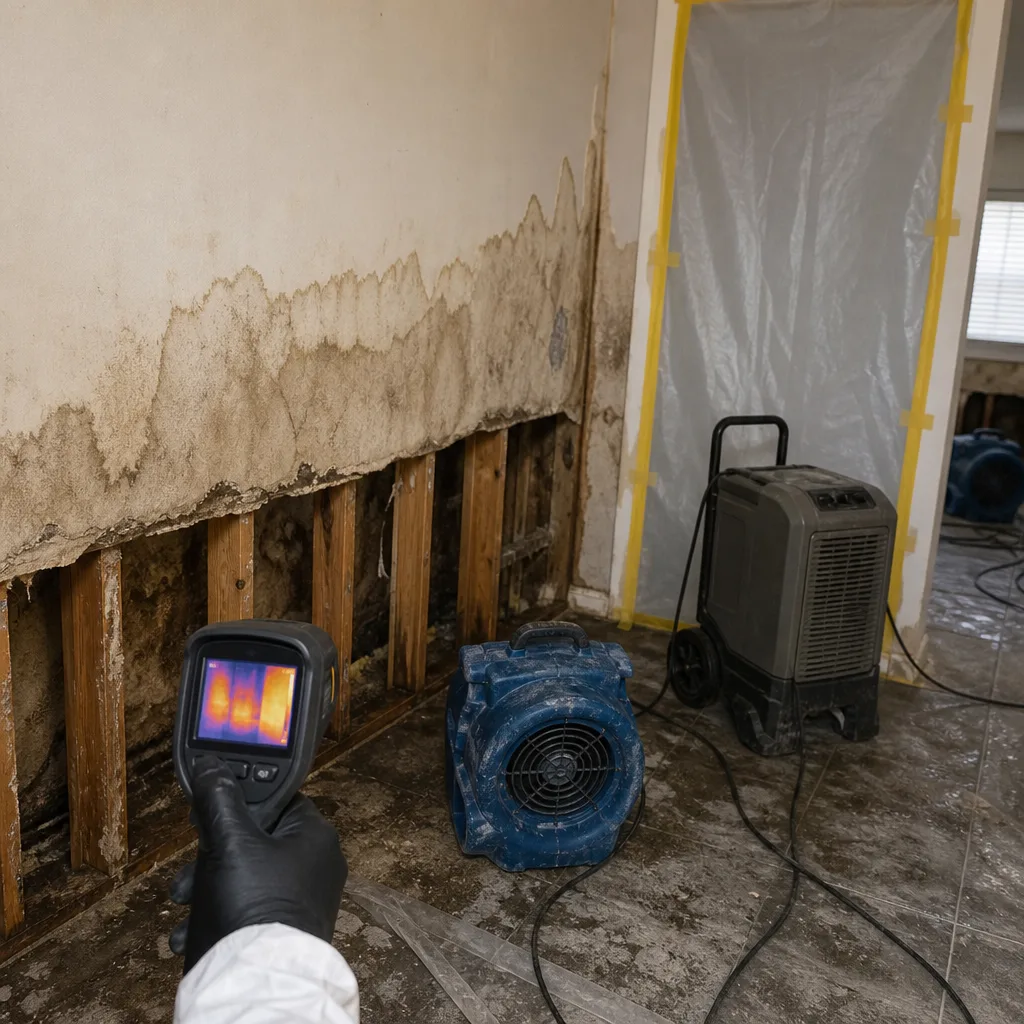 Before
 After
After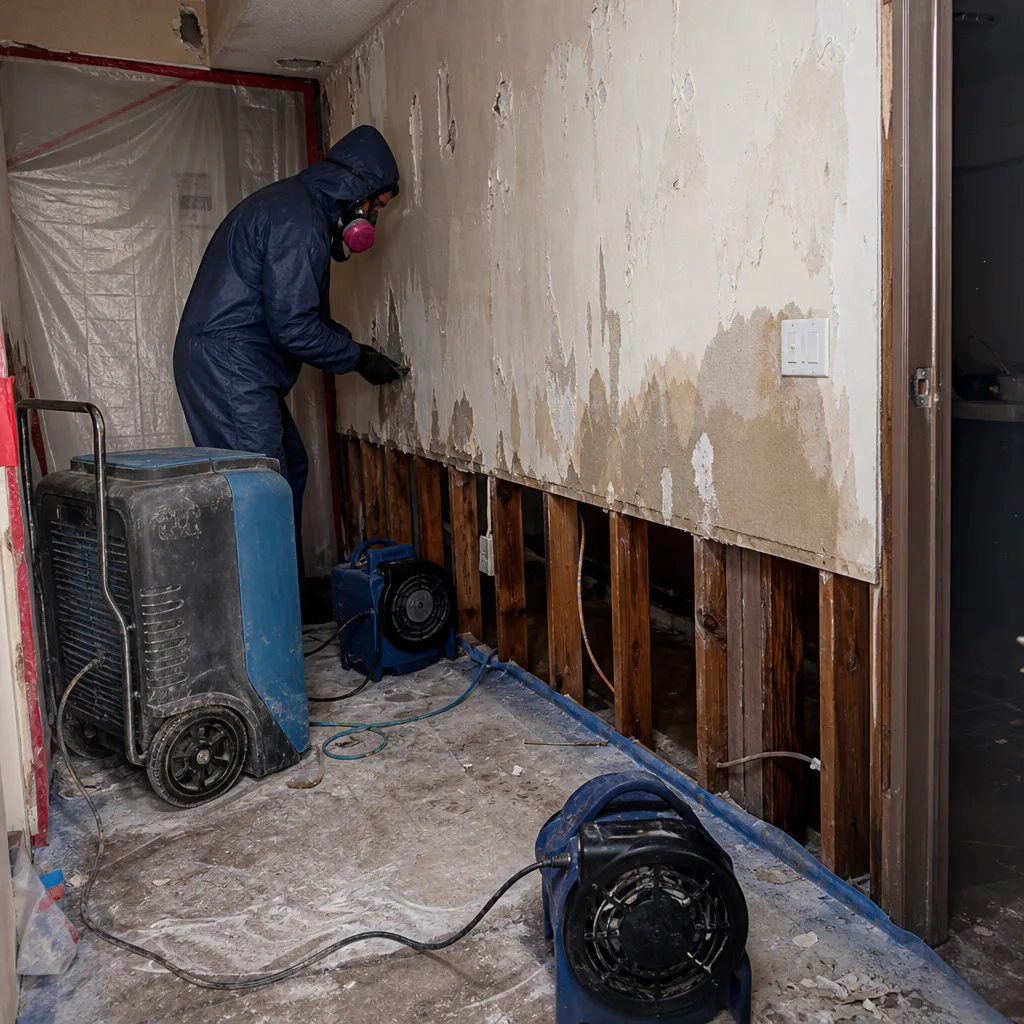 Before
 After
After