
 Water damage drying
 Fire & smoke cleanup
 Mold remediation
 Storm response
 Sewage cleanup
 Reconstruction
Free visual inspection and a written scope of work before any mitigation begins - photos, moisture readings, and drying logs go in your claim file
The scope we write is the scope we bill. Anything new gets shown to you, in writing, before we touch it.
Get your free estimateFast, Reliable Water Damage Restoration Across Glenn Heights
If you’ve got water where it shouldn’t be in Glenn Heights, you need a crew that understands slab foundations and Blackland Prairie clay, not a generic restoration outfit. Water damage restoration in Glenn Heights typically runs $2,850 to $7,400 depending on how far the water traveled and what it soaked into, and most emergency extraction jobs can be started the same day you call. We’re Dryden Restoration Dallas, an independently owned and operated Kingswell company that has served Glenn Heights homeowners since 2005 with written pricing before any tool is touched and a 365-day guarantee on every repair. Call (940) 468-1166 and a live person answers, day or night.
Why Dryden Restoration Dallas Is Glenn Heights’s Preferred Water Damage Restoration Company
Glenn Heights homeowners call us because we understand what happens when water hits a slab-on-grade home built during the post-2000 Dallas exurb boom. Most restoration companies treat every water event the same way: tear out wet drywall, set up fans, leave. But water on a concrete slab in Glenn Heights behaves differently than water in a pier-and-beam house in East Dallas. It wicks sideways under luxury vinyl plank, travels along baseplates, and hides in places a moisture meter will miss if the tech doesn’t know to look. Our crews have worked hundreds of Glenn Heights jobs, and we know the neighborhoods: Oak Tree, Somerset, the newer sections off Hampton Road near U.S. 67. When you call, the person who answers can tell you exactly when a uniformed, background-checked technician will arrive, and that technician will show up with a written scope and price before any equipment comes off the truck.
We build trust the old way here. We say the price before the work. We show up in the window we gave you. We leave the job site cleaner than we found it. And we put the 365-Day Done Right Promise in writing on every job, including water extraction and structural drying. If a covered repair fails within a year, we come back and make it right at no charge. That’s not a marketing line; it’s a documented guarantee backed by the Kingswell family of restoration businesses. Our technicians work to IICRC, RIA, and IFA standards, and our equipment includes Dri-Eaz, Phoenix, and XPOWER systems, the same professional-grade machines used on large commercial jobs. When a Glenn Heights homeowner asks if we’re qualified, we point to those specific standards and machines, not adjectives.
Restoration work we handle
Flooded Basement in Glenn Heights
A flooded basement in Glenn Heights is almost always a misnomer, because most homes here don’t have basements at all: they’re built on concrete slabs over expansive clay, and that changes everything about how water behaves when a supply line ruptures or a storm sewer backs up. What looks like a “basement flood” in another city is, in Glenn Heights, typically a slab leak with water rising up through floor coverings, or a runoff event where rolling terrain pushes stormwater against the foundation and into the building envelope. Homeowners see water pooling in a sunken living room or seeping up through tile grout lines and assume it’s coming from below. Often it is. Either way, the job requires the same first step: emergency extraction, containment, and moisture mapping to find where the water actually traveled.
What a Glenn Heights “Basement” Flood Actually Means
When we get a call for a flooded basement in Glenn Heights, we arrive with thermal imaging and moisture meters, not just a wet vac. Slab foundations hide water in ways that would be obvious in a traditional basement. Water can travel 20 feet under vinyl plank before it shows up as a stain on the surface. We map the entire affected area, mark the boundaries, and only then start extraction. A typical response in Glenn Heights begins with Category 1 or 2 water from a ruptured supply line or water heater, and our crews can usually be on site within 60 to 90 minutes of your call.
Rapid Water Removal From Slab Homes
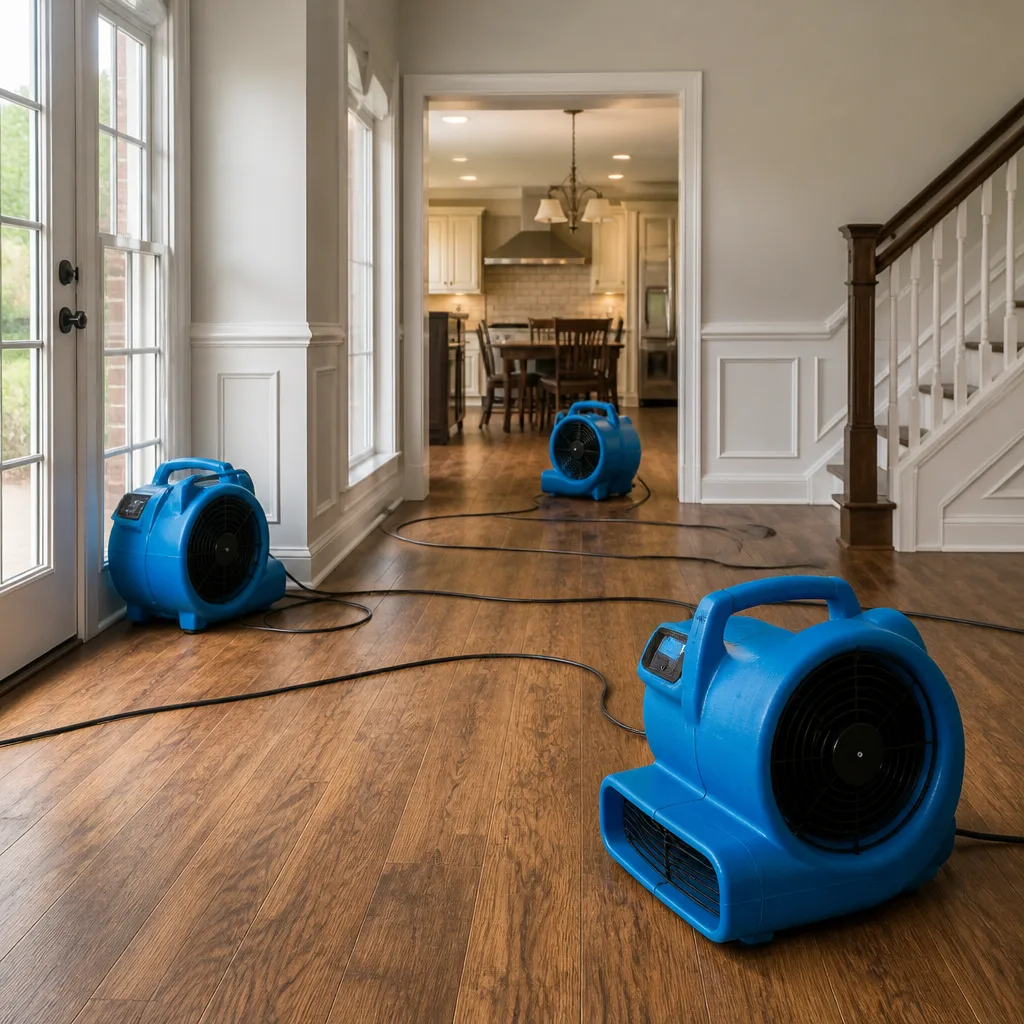
For water sitting on concrete, the clock matters. Concrete is porous. It absorbs water and releases it slowly, keeping indoor relative humidity high for weeks after the visible water is gone. That’s why we use commercial dehumidifiers and air movers, not box fans. If you call us within the first few hours, we can often save flooring and drywall that would otherwise need replacement. The sooner you call (940) 468-1166, the less this costs.
Water Extraction in Glenn Heights
Water Extraction in Glenn Heights is the first and most urgent step in any restoration job, and it’s where minutes of delay turn a $3,000 cleanup into a $12,000 reconstruction. When a supply line bursts in a Glenn Heights home, the water doesn’t drain away; it pools on the slab and spreads across open floor plans, soaking into drywall, baseboards, and anything sitting on the floor. Our extraction crews use truck-mounted and portable extraction units to pull standing water out fast, then switch to structural drying. The cost for water extraction alone in Glenn Heights runs $850 to $2,400 depending on square footage, water depth, and how far it spread. That price is always given in writing before we begin.
What Happens During the First Two Hours
The first thing we do is stop the source if it hasn’t already been shut off. Then we photograph everything, including the water line on walls and baseboards. Those photos document the loss for your insurance claim and our adjuster coordination. Next we extract, remove wet pad and carpet if needed, and set up containment to keep the rest of the house dry. In a Glenn Heights slab home, we pay special attention to floor registers in the slab, because water loves to run down HVAC ducts and hide there.
The Failure Point Most Techs Miss
Here’s a specific Glenn Heights problem: water wicks under luxury vinyl plank and laminate flooring even after the surface looks dry. Tile and vinyl trap moisture against the slab, creating a hidden vapor barrier that feeds mold for weeks. We lift and inspect a sample of flooring edges before we declare the job dry. If a contractor dries in place without checking under the floor, you’ll find out weeks later when the planks cup or the baseboards start staining. That’s exactly the kind of failure our 365-Day Done Right Promise covers, and exactly why we don’t skip the step.
Trusted Brands We Service in Glenn Heights
The restoration equipment we run in Glenn Heights homes isn’t rental-store gear. Our fleet includes Dri-Eaz dehumidifiers, Phoenix air movers, XPOWER axial fans, and Injectidry systems for drying inside wall cavities and under flooring without full demolition. These are the same machines commercial restoration teams use on multi-unit apartment floods and hospital water events. We stock replacement parts and filters on our trucks so a Glenn Heights job doesn’t stall waiting on a part from Fort Worth. When we set up drying equipment in your home, we explain exactly what each machine does, how long it will run, and what the humidity readings mean as they drop. That’s what IICRC, RIA, and IFA standards look like in practice, not a certificate on a wall but a tech who knows what the numbers mean and explains them to you.
See the difference
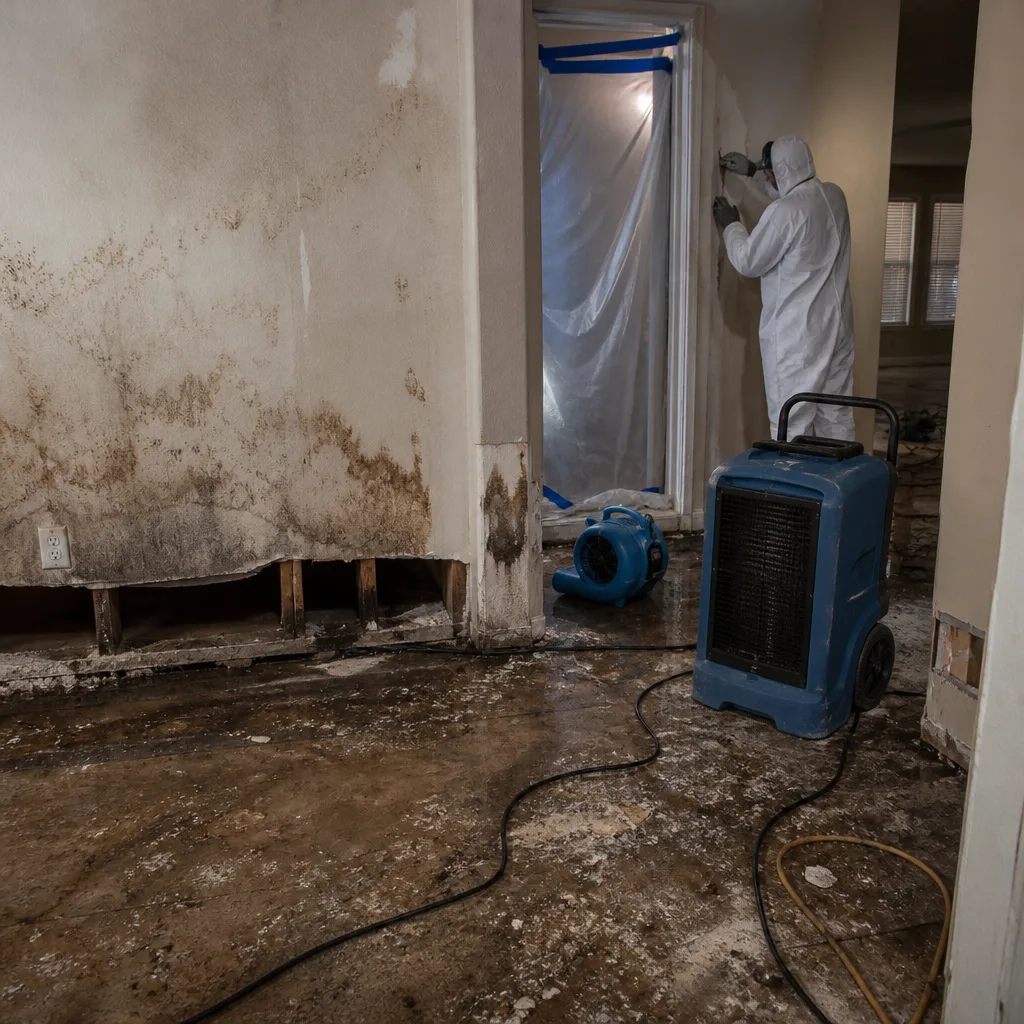 Before
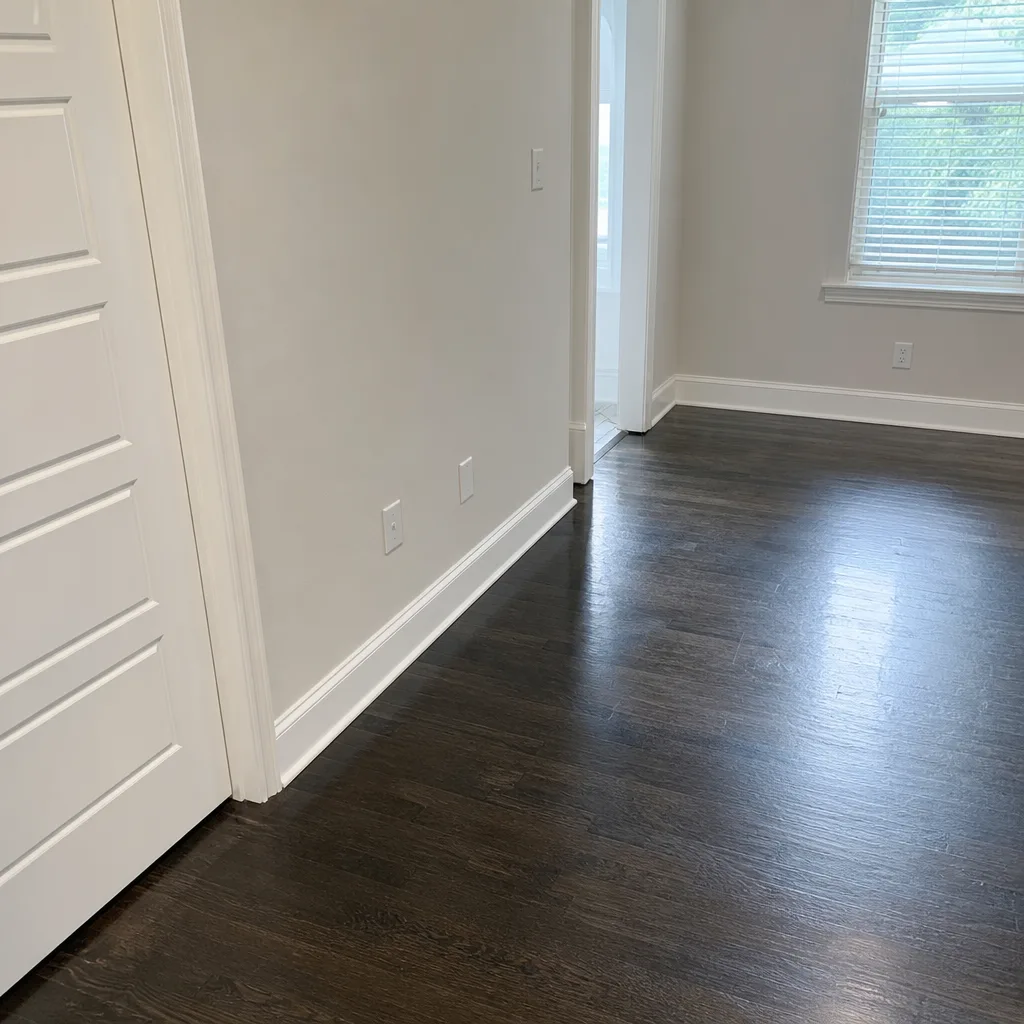 After
After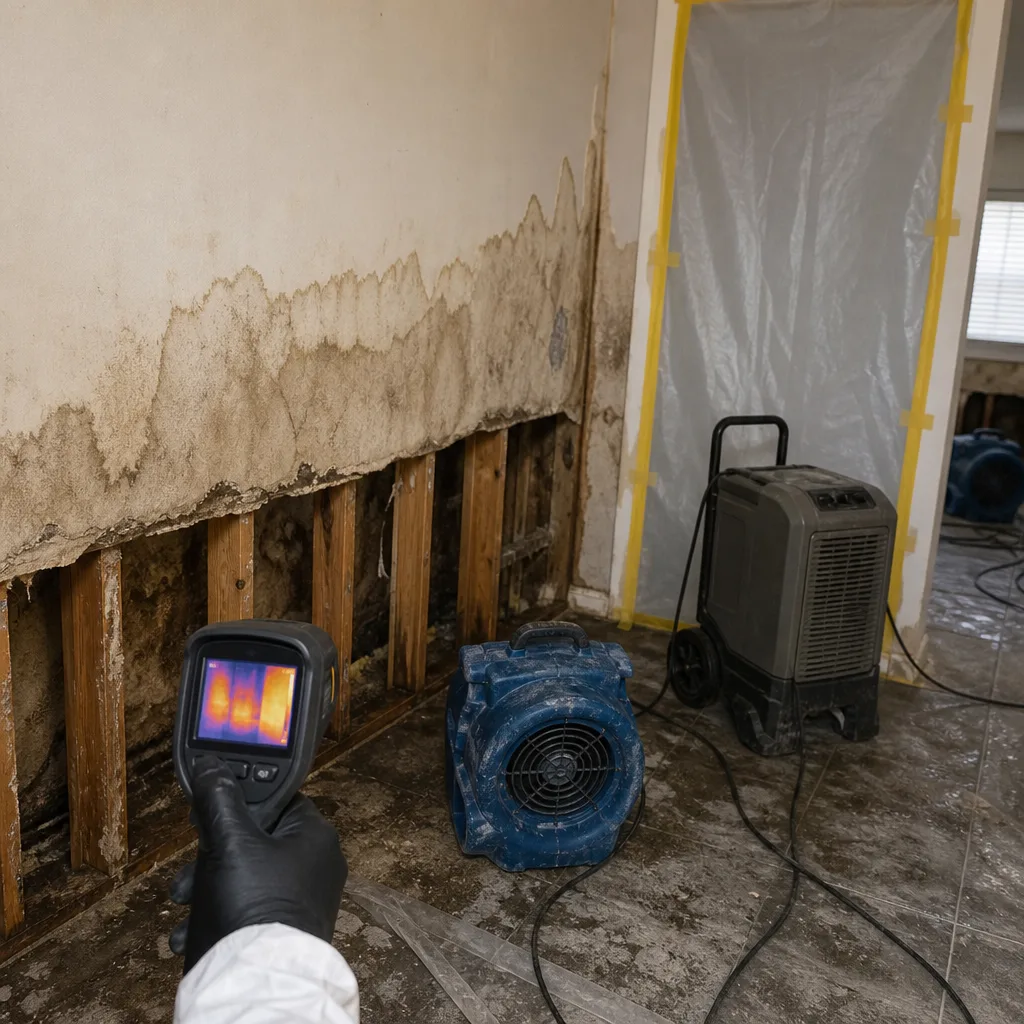 Before
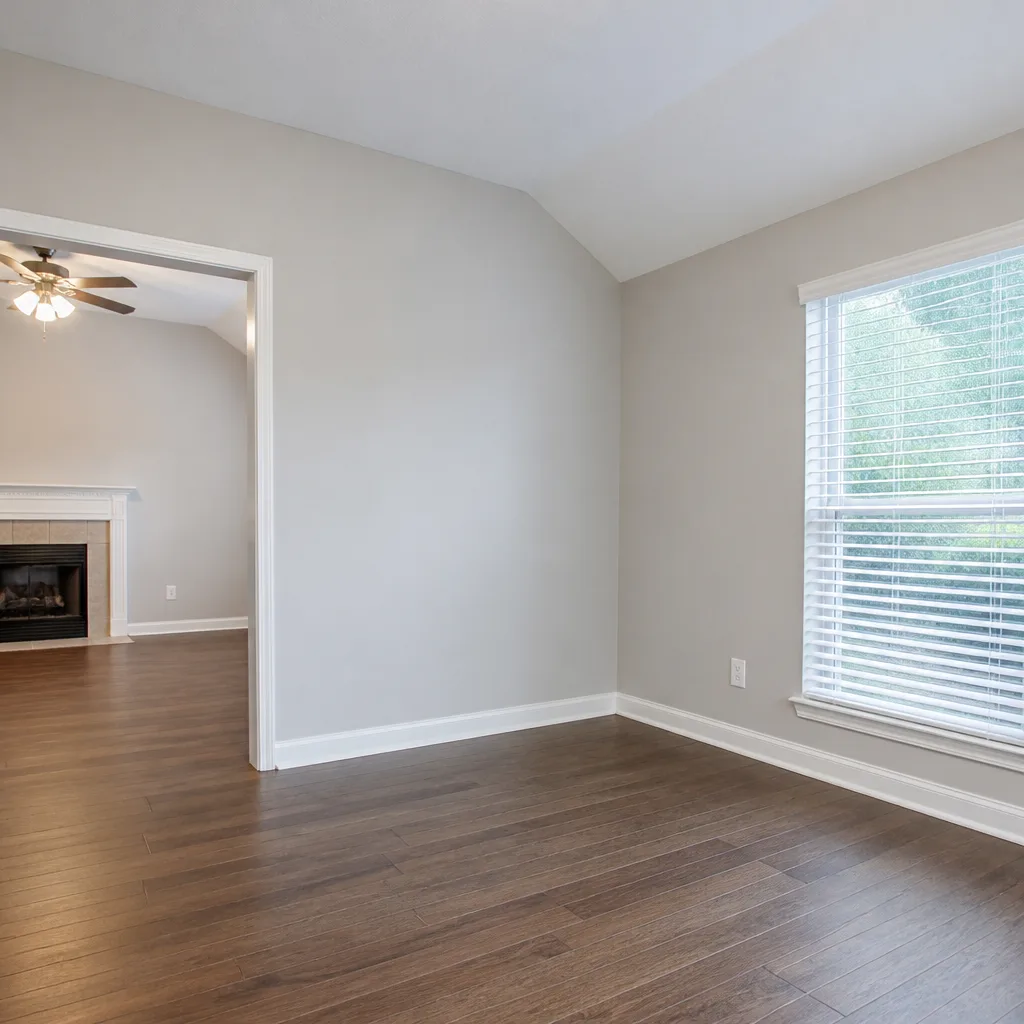 After
After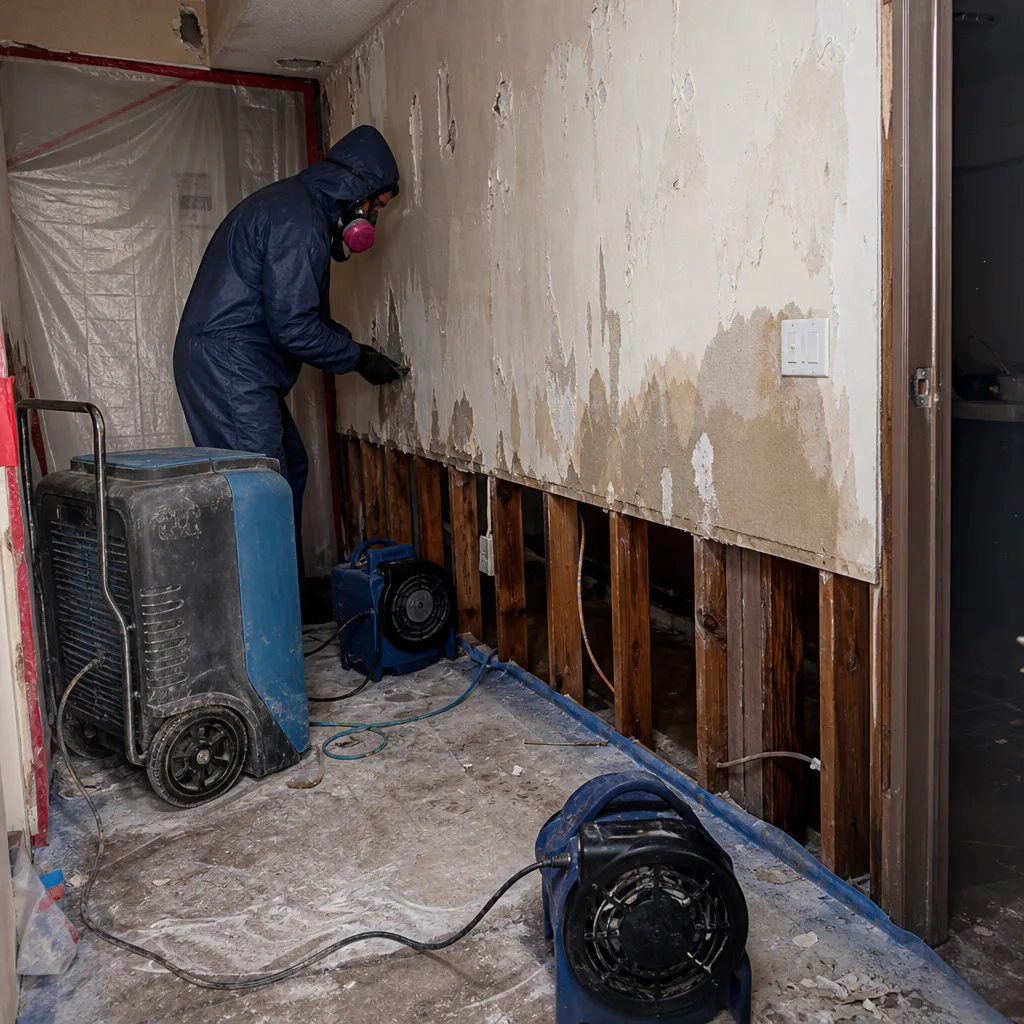 Before
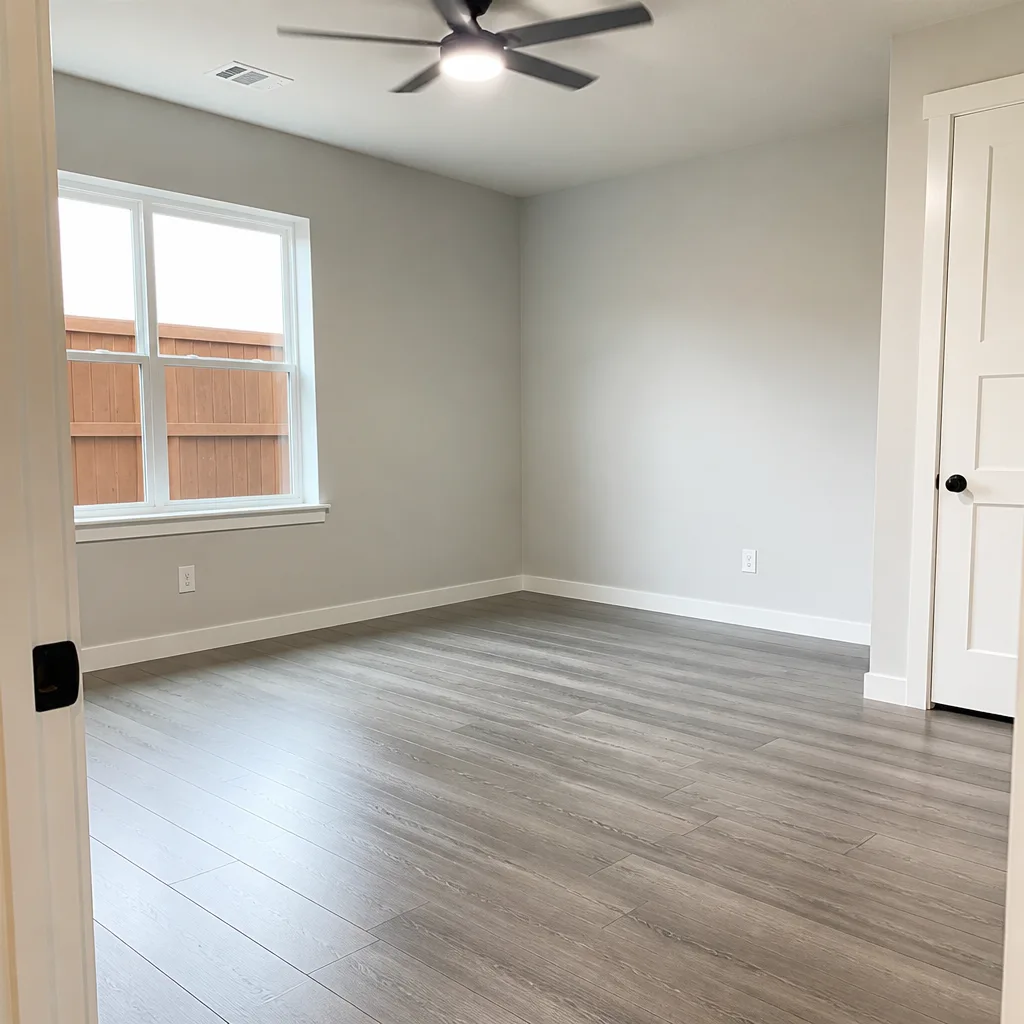 After
AfterCommon Water Damage Restoration Problems We See in Glenn Heights Homes
- Slab leaks with no visible water source. Glenn Heights homes sit on Blackland Prairie clay, which swells when wet and shrinks when dry. That seasonal movement stresses copper supply lines under the slab. The first sign is often water seeping up through tile grout or the edge of a room, with no visible leak anywhere. We trace it with acoustic listening and moisture mapping, then coordinate the slab repair before drying begins.
- Runoff intrusion through the building envelope. The rolling terrain in parts of Glenn Heights directs stormwater toward foundations during heavy thunderstorms. Water pushes against the baseplate, finds a seam in the brick veneer or flashing, and wets interior drywall from the outside in. On streets in the Oak Tree subdivision, we can often identify this pattern by the silt “tide line” left on baseboards after a storm.
- Hidden moisture under luxury vinyl plank. Vinyl and laminate flooring installed directly on slab acts like a vapor barrier, trapping water beneath it. Homeowners see no damage on the surface, but RH readings stay elevated and mold grows underneath. We lift and dry under these floors, or remove them entirely when saturation is extensive.
- HVAC ducts flooded through floor registers. In a slab home, the air ducts run through the concrete. When water pools on the floor, it drains into registers and fills the duct runs. If you don’t dry the ducts, your AC system becomes a mold distribution machine. We inspect and dry duct interiors as part of every Glenn Heights slab leak job.
Pricing for Water Damage Restoration in Glenn Heights, TX
We Also Serve Cities Near Glenn Heights
If you live just outside Glenn Heights, we provide the same Water Damage Restoration service with the same written pricing and 365-day guarantee to homeowners in Dallas, Plano, Mesquite, and Carrollton. Our crews are scheduled from the Dallas-Fort Worth office and serve Glenn Heights and surrounding communities with local response times. Call (940) 468-1166 from anywhere in the area and we’ll route the nearest available technician to you.
Serving Glenn Heights, TX - Our Local Coverage Area
We’re based in the Glenn Heights area and know this community well. Use the map below to see our service coverage - if you’re nearby, we can almost certainly help.
FAQs About Water Damage Restoration in Glenn Heights
Why does Glenn Heights have so many slab leaks compared to older Dallas neighborhoods?
Glenn Heights has more slab leaks because the homes were built in a wave of rapid post-2000 expansion on Blackland Prairie clay, which swells and shrinks dramatically with seasonal moisture changes, flexing the concrete slab and stressing the copper supply lines running through it. Older Dallas neighborhoods built before this expansion often sit on different soils or have pier-and-beam foundations that don’t create the same stress pattern. When we trace a slab leak in Glenn Heights, soil movement is almost always a factor. Call (940) 468-1166 if you suspect one.
What does the silt line on my baseboards after a Glenn Heights storm mean for restoration?
A silt line on baseboards after a storm means exterior runoff entered your home and carried soil in with it, which makes this a Category 3 water loss requiring full drywall removal below the line, not surface drying. In parts of Glenn Heights with rolling terrain, stormwater picks up silt from the Blackland Prairie soil before it reaches your foundation. If a contractor tries to “dry in place” under those conditions, mold will grow behind the walls within weeks. We remove and replace everything below the silt line.
How quickly can mold start growing on wet drywall in Glenn Heights homes?
Mold can start growing on wet drywall within 24 to 48 hours in a Glenn Heights home during the humid summer months, when indoor relative humidity stays elevated even after the visible water is gone. The Texas heat accelerates the process compared to cooler climates. That’s why we dispatch same day for water events in Glenn Heights and why we don’t wait until Monday to set up drying equipment. Call (940) 468-1166 the moment you see water, not the day after.
My brick veneer home in Glenn Heights has water seeping up through the tile after heavy rain. Is that a foundation issue?
Not necessarily. It could be runoff intrusion through the building envelope, where water pushes against the baseplate and finds a path under the tile, or it could be hydrostatic pressure from saturated soil forcing water up through slab cracks. In Glenn Heights brick veneer homes, both happen. We determine which one you have with moisture mapping and thermal imaging before recommending any repair. You don’t need to assume the worst, but you do need an accurate assessment, and that’s what we provide.
Do I need to move out during water damage restoration in a Glenn Heights slab home?
Most single-room water losses don’t require you to leave, but larger events where we must remove flooring, drywall, and run commercial dehumidifiers for several days often make the home uncomfortable and loud, and many Glenn Heights homeowners choose to stay elsewhere for three to five nights. If the loss involves Category 3 water from sewage or runoff, you should not stay in the affected area until it’s been removed and sanitized. We’ll tell you honestly what’s needed, and we’ll coordinate with your insurer on the restoration scope.
Written by Carl Brandt, Owner at Dryden Restoration Dallas, serving Glenn Heights since 2005.